
Squash comes in two kitchen groups. Summer squash like zucchini, yellow squash, and pattypan is picked young, has soft edible skin, and cooks in minutes. Winter squash like butternut, acorn, kabocha, and spaghetti squash is harvested mature, has a hard rind, keeps for months, and needs longer cooking.
This guide covers 44 types, grouped by how they cook, with photos to help you identify each one. Squash, pumpkins, and gourds all belong to the same plant family, Cucurbitaceae.

| Group | Examples | Skin | Flesh | Best cooking |
|---|---|---|---|---|
| Summer squash | Zucchini, yellow, pattypan, cousa | Thin, edible | Tender, watery | Sauté, grill, raw |
| Acorn-type winter (C. pepo) | Acorn, delicata, sweet dumpling, spaghetti | Thin to medium; delicata edible | Mild, slightly fibrous | Roast halves or wedges |
| Kabocha and Hubbard types (C. maxima) | Kabocha, buttercup, red kuri, Hubbard | Hard; kabocha and kuri edible when cooked | Dry, dense, very sweet | Roast, steam, puree |
| Butternut types (C. moschata) | Butternut, honeynut, calabaza, Dickinson | Smooth, peelable | Moist, smooth, sweet | Roast, soup, pie |
| Squash relatives | Cushaw, chilacayote, chayote | Varies | Mild | Pies, sweets, stews |
⬇️ Table of Contents
Summer squash
Summer squash is picked young, while the skin is thin and the seeds are soft, so you can eat the whole thing, skin and all. Almost all of it is Cucurbita pepo. It keeps about a week in the refrigerator, cooks in minutes, and can be eaten raw.
1. Zucchini Squash

The most familiar summer squash: a straight, cylindrical fruit picked while immature, usually 6 to 8 inches long.
- Origin: Cucurbita pepo. Squash is native to the Americas; the modern zucchini type was developed in Italy.
- Appearance: Smooth, glossy dark green skin, sometimes striped or speckled; pale cream flesh with small, soft seeds.
- Taste: Mild and slightly grassy; tender when young, watery and seedy when oversized.
- Best uses: Sautéed, grilled, roasted, shaved raw into salads, spiralized, baked into bread, or layered in place of noodles in zucchini lasagna.
- Kitchen note: Cut slices ¼ to ½ inch thick; thinner slices go limp before they brown. Sear them in a single layer in shimmering oil over medium-high heat, turning rarely, and pull them as soon as they are just tender. Finish with lemon, fresh mint, and a pinch of sumac. Choose small, firm zucchini under 8 ounces, which are less watery and less seedy.
- Points of interest: Called courgette in Britain, France, and much of Europe. A zucchini left on the vine until large and hard-skinned is usually called a marrow.
2. Cousa Squash

A short, pale green zucchini type from the Middle East, wider at the blossom end and built for stuffing.
- Origin: Cucurbita pepo; a Middle Eastern zucchini type. The name comes from the Arabic word for squash.
- Appearance: Light green to gray-green skin, short and stocky with a rounded, bulbous blossom end.
- Taste: Sweeter and nuttier than standard zucchini, with thinner skin.
- Best uses: Hollowed and stuffed with rice and meat (kousa mahshi), sautéed, or grilled.
- Kitchen note: Hollow cousa with an apple corer or a narrow spoon, and save the scooped flesh for the filling or an omelet.
- Points of interest: The thin skin bruises easily, so cook cousa within a few days of buying.
3. Lebanese Squash
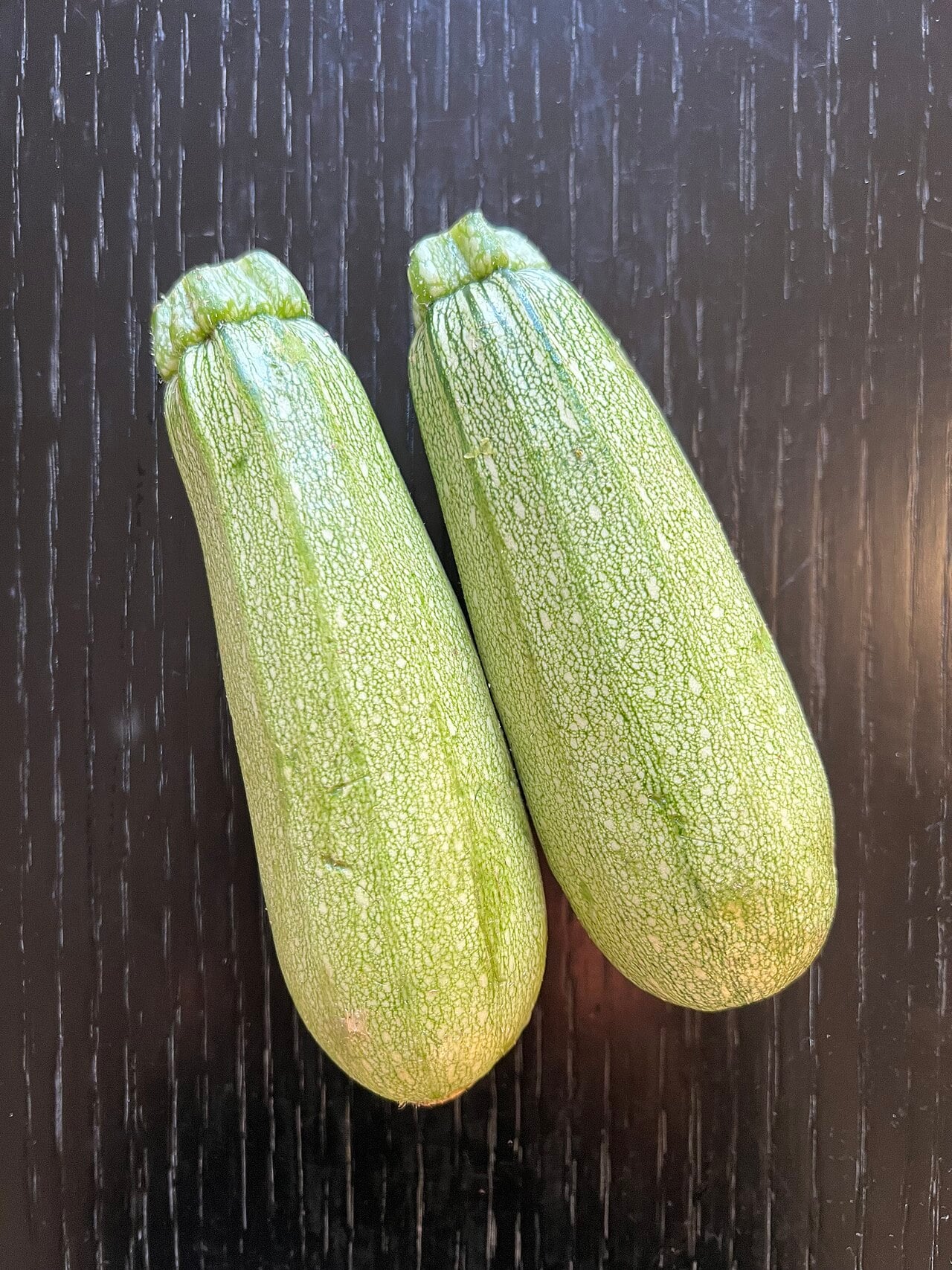
A pale, light green Middle Eastern summer squash, closely related to cousa and grown for heavy yields.
- Origin: Cucurbita pepo; Middle Eastern summer squash type.
- Appearance: Pale green skin with a slightly tapered shape; picked young and tender or allowed to grow larger for stuffing.
- Taste: Mild and sweet with a delicate, creamy texture.
- Best uses: Stuffing, sautéing, grilling, and soups.
- Kitchen note: Pick or buy them small for sautéing; save larger fruits for stuffing, where the bigger cavity helps.
- Points of interest: Seed sources report around 15 fruits per plant in good conditions. Often sold interchangeably with cousa.
4. Eight Ball Squash
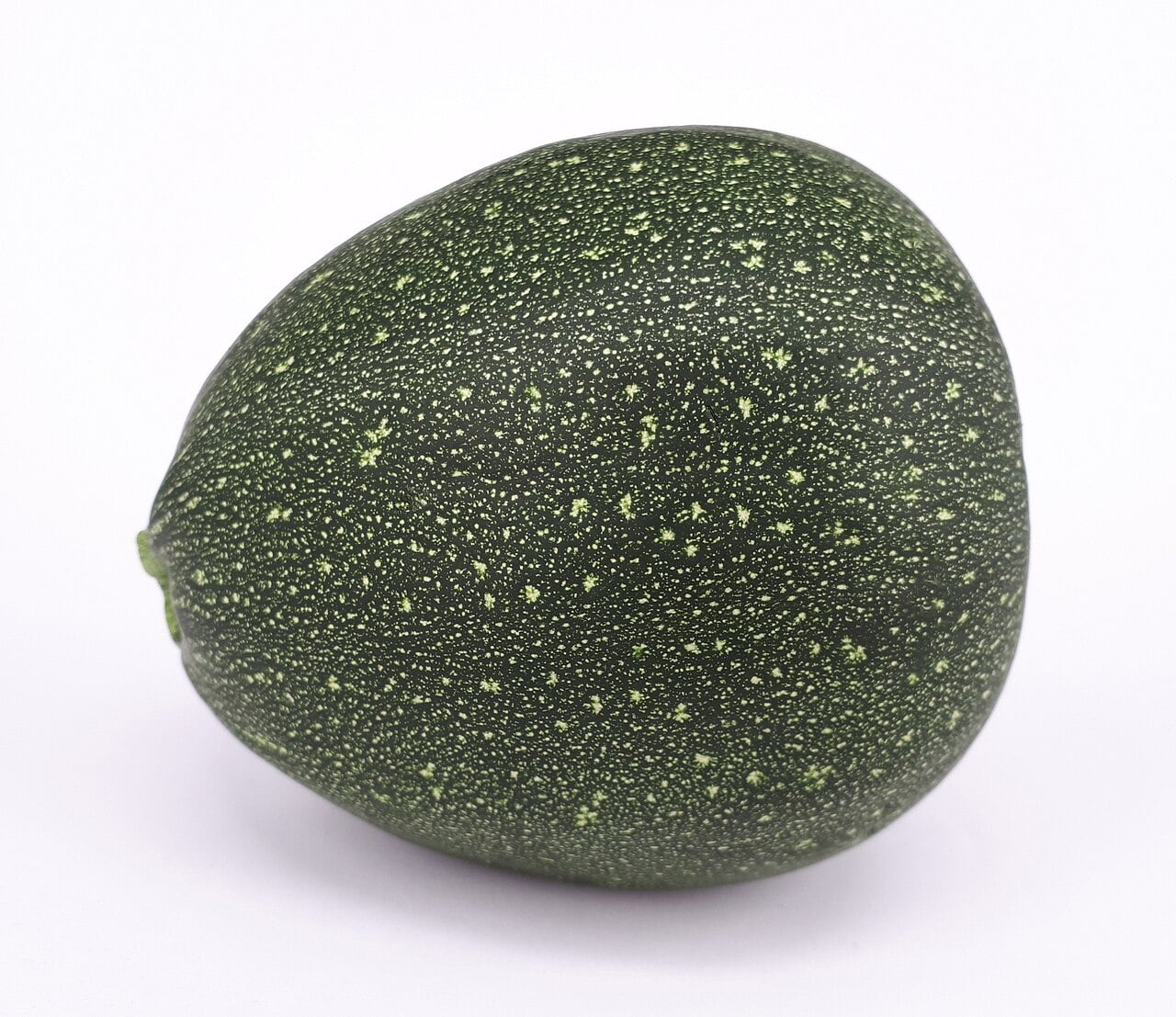
A round green zucchini, about the size of a billiard ball when picked, which is where it gets its name.
- Origin: Cucurbita pepo; a modern hybrid round zucchini.
- Appearance: Dark green, glossy, spherical skin with faint light speckling.
- Taste: Mild zucchini flavor with dense, tender flesh.
- Best uses: Stuffing and baking, roasting whole, halving for the grill, or grating for zucchini taco shells.
- Kitchen note: Cut a lid off the top, scoop the inside, and you have a ready-made cup for stuffing.
- Points of interest: Best harvested at 3 to 4 inches across; larger fruits get seedy. Related round types include One Ball (yellow) and Ronde de Nice.
5. Green Egg Squash

A hybrid summer squash with deep green, egg-shaped fruit on bushy plants.
- Origin: Cucurbita pepo; modern hybrid.
- Appearance: Deep green skin; small oval fruit when harvested young.
- Taste: Mild, typical zucchini flavor.
- Best uses: Sautéing, grilling, and stuffing.
- Kitchen note: Use these small whole squash the same way as Eight Ball: halve them for the grill or scoop them for stuffing.
- Points of interest: The bushy vines take less space than sprawling squash types.
6. Gold Rush Squash
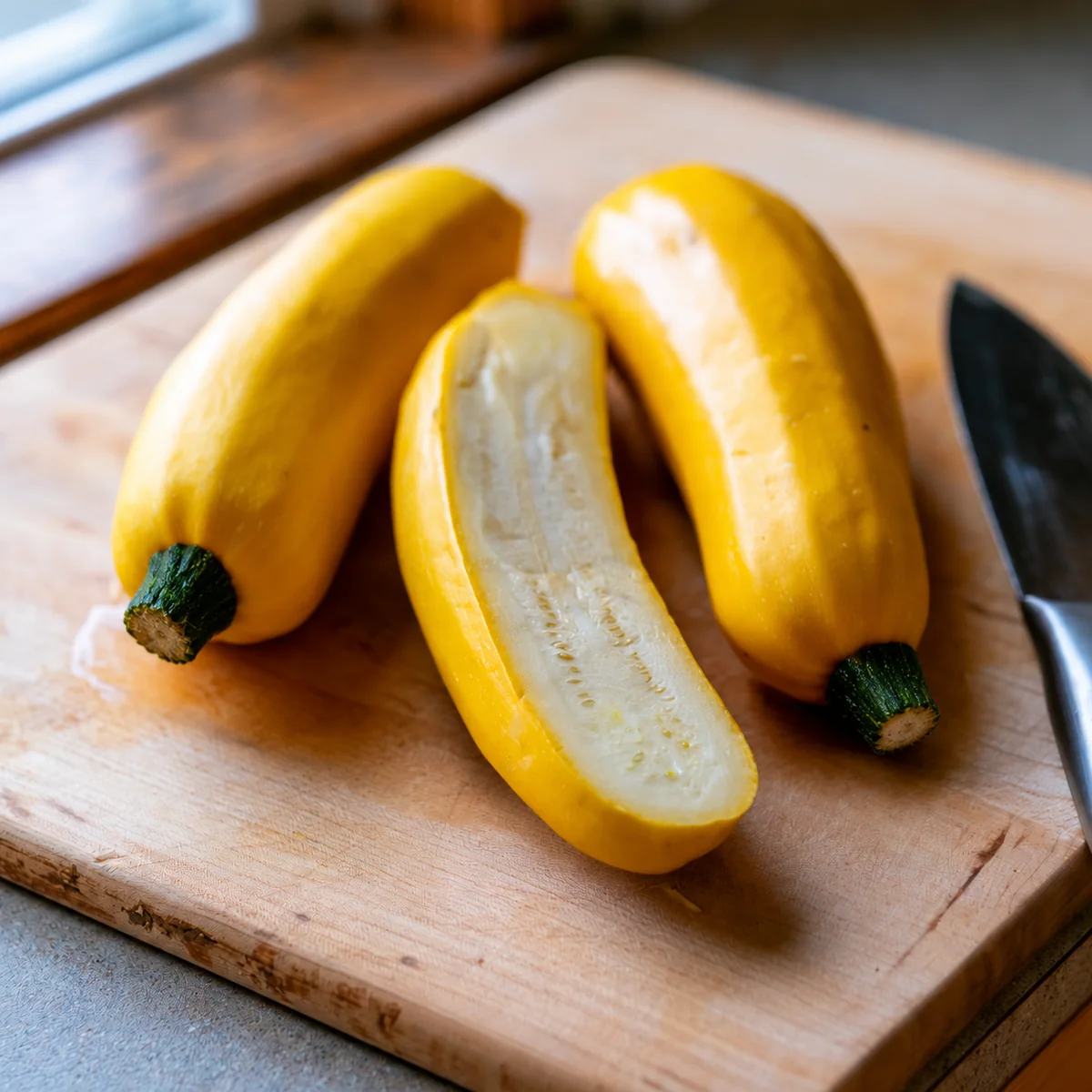
A yellow zucchini: zucchini shape and texture with bright golden skin.
- Origin: Cucurbita pepo; hybrid yellow zucchini.
- Appearance: Glossy yellow skin with a dark green stem; straight, cylindrical fruit.
- Taste: Mild with creamy white flesh.
- Best uses: Raw in salads, steamed, sautéed, or grilled; adds color to mixed vegetable dishes.
- Kitchen note: Pair with green zucchini cut the same size for a two-color sauté that cooks evenly.
- Points of interest: Its color makes ripe fruit easy to spot under the leaves at harvest.
7. Parador Squash
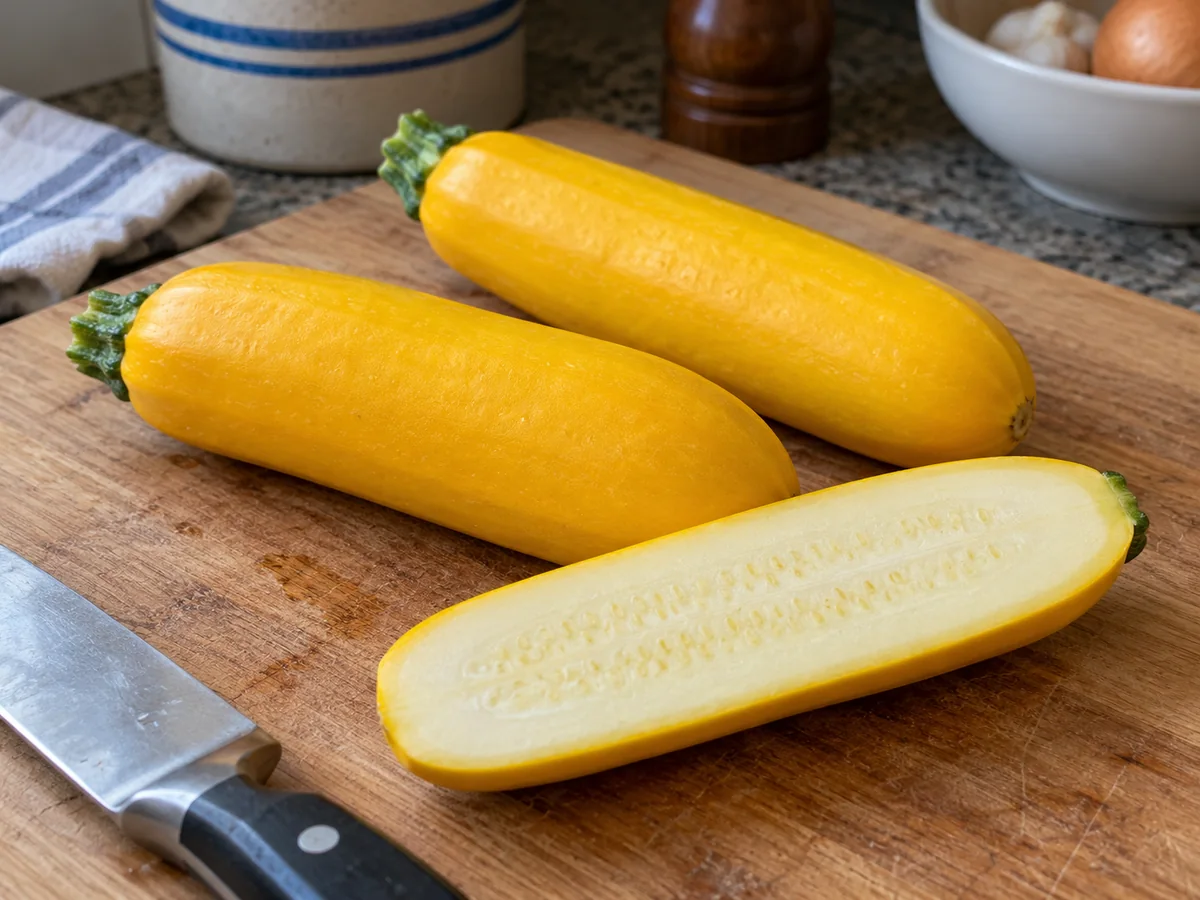
A fast-growing yellow summer squash with velvety golden skin and small, angled ridges.
- Origin: Cucurbita pepo; hybrid offered by European seed houses.
- Appearance: Velvety yellow skin with fine ridges that tilt at an angle; zucchini-like shape.
- Taste: Mild and tender when young.
- Best uses: Sautéing, grilling, and quick roasting.
- Kitchen note: Like all summer squash, it cooks fast; pull it from the pan while it still has some bite.
- Points of interest: Grows quickly, so check plants daily at harvest time.
8. Crookneck Squash

A yellow summer squash with a narrow neck that curves over at the stem end.
- Origin: Cucurbita pepo; one of the older summer squash types grown in North America.
- Appearance: Bright yellow (sometimes pale green or orange) skin, often bumpy; bulbous blossom end and a hooked neck.
- Taste: Mild and buttery, slightly sweeter than zucchini.
- Best uses: Sautéed with onions, casseroles, fritters, and Southern-style squash dishes.
- Kitchen note: Choose crooknecks under about 6 inches; bigger ones develop hard, warty skin and large seeds.
- Points of interest: The curved neck gives the squash its name. Straightneck squash is a closely related type.
9. Yellow Squash

The everyday supermarket yellow summer squash, usually a straightneck or crookneck type.
- Origin: Cucurbita pepo, in the same family (Cucurbitaceae) as pumpkins and cucumbers.
- Appearance: Yellow skin, tender rind, cream flesh; harvested while immature.
- Taste: Mild and slightly sweet.
- Best uses: Sautéing, casseroles, grilling, and raw in salads.
- Kitchen note: Yellow squash has softer skin than zucchini and browns faster, so give it a hot pan and do not crowd it.
- Points of interest: Many varieties reach first harvest in about 50 to 60 days and keep producing with regular picking. Plants range from compact bushes to several feet across, depending on variety.
10. Zephyr Squash

A two-tone summer squash that looks like a yellow squash dipped in pale green at the blossom end.
- Origin: Cucurbita pepo. Introduced by Johnny's Selected Seeds in 1999; bred from yellow crookneck crossed with a delicata × yellow acorn line (Fedco Seeds variety notes).
- Appearance: Slender, mostly straight fruit, yellow at the stem with faint white stripes and pale green at the blossom end.
- Taste: Firm texture and a mild, nutty flavor.
- Best uses: Raw, sautéed, grilled, or roasted; holds its shape better than most yellow squash. Thin slices also work for crispy baked squash chips.
- Kitchen note: Its firmer flesh makes it the yellow squash to grill in planks; it won't go limp as quickly.
- Points of interest: Harvest at 4 to 6 inches. The green tip can vary in very hot or dry weather.
11. Fortune Squash
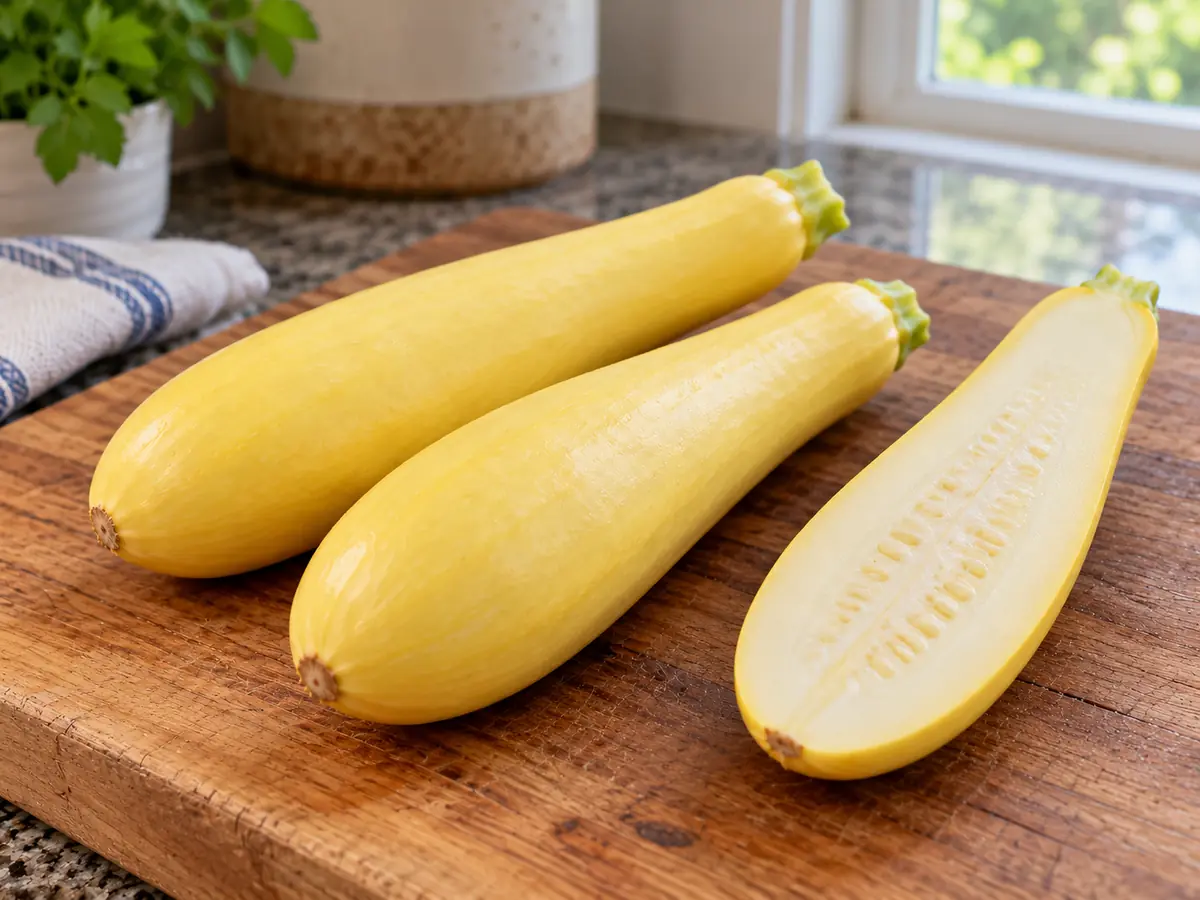
A yellow summer squash grown for its rich golden color and early harvest.
- Origin: Cucurbita pepo; hybrid summer squash from Rupp Seeds.
- Appearance: Golden yellow skin, smooth and uniform.
- Taste: Mild, typical yellow-squash flavor.
- Best uses: Sautéing, grilling, steaming.
- Kitchen note: Use it anywhere you would use yellow squash.
- Points of interest: Bred for an early harvest compared with many other summer varieties.
12. Pattypan Squash

A round, flattened summer squash with a scalloped edge, also sold as scallop squash.
- Origin: Cucurbita pepo; scallop types have been grown in North America since before European contact.
- Appearance: Saucer shape with scalloped edges; white, pale green, yellow, or dark green.
- Taste: Mild and slightly buttery; small ones are the most tender.
- Best uses: Roasted whole, sautéed, stuffed, grilled, soups, stir-fries, and casseroles.
- Kitchen note: Halve small pattypan crosswise to keep the scalloped outline, toss with oil and salt, and lay them cut side down on a sheet pan preheated in a 500°F (260°C) oven. Roast 15 to 18 minutes without flipping, until the cut faces are deeply browned. Pick squash about 3 to 4 inches across or smaller; larger ones develop tough skin and turn starchy.
- Points of interest: Also called scallop squash or custard squash. Can be eaten raw or cooked.
13. Papaya Pear Squash

A small, pear-shaped yellow summer squash that looks a little like a tropical fruit.
- Origin: Cucurbita pepo; modern hybrid summer squash.
- Appearance: Yellow skin, sometimes with green speckles; round-bottomed pear shape.
- Taste: Slightly sweet and mild.
- Best uses: Raw on sandwiches or in salads, grilled, sliced and sautéed, or halved and stuffed.
- Kitchen note: Cut it in half lengthwise for the grill; the shape gives you a flat face and a natural bowl.
- Points of interest: Best picked small, around 3 inches across.
14. Tatume Squash
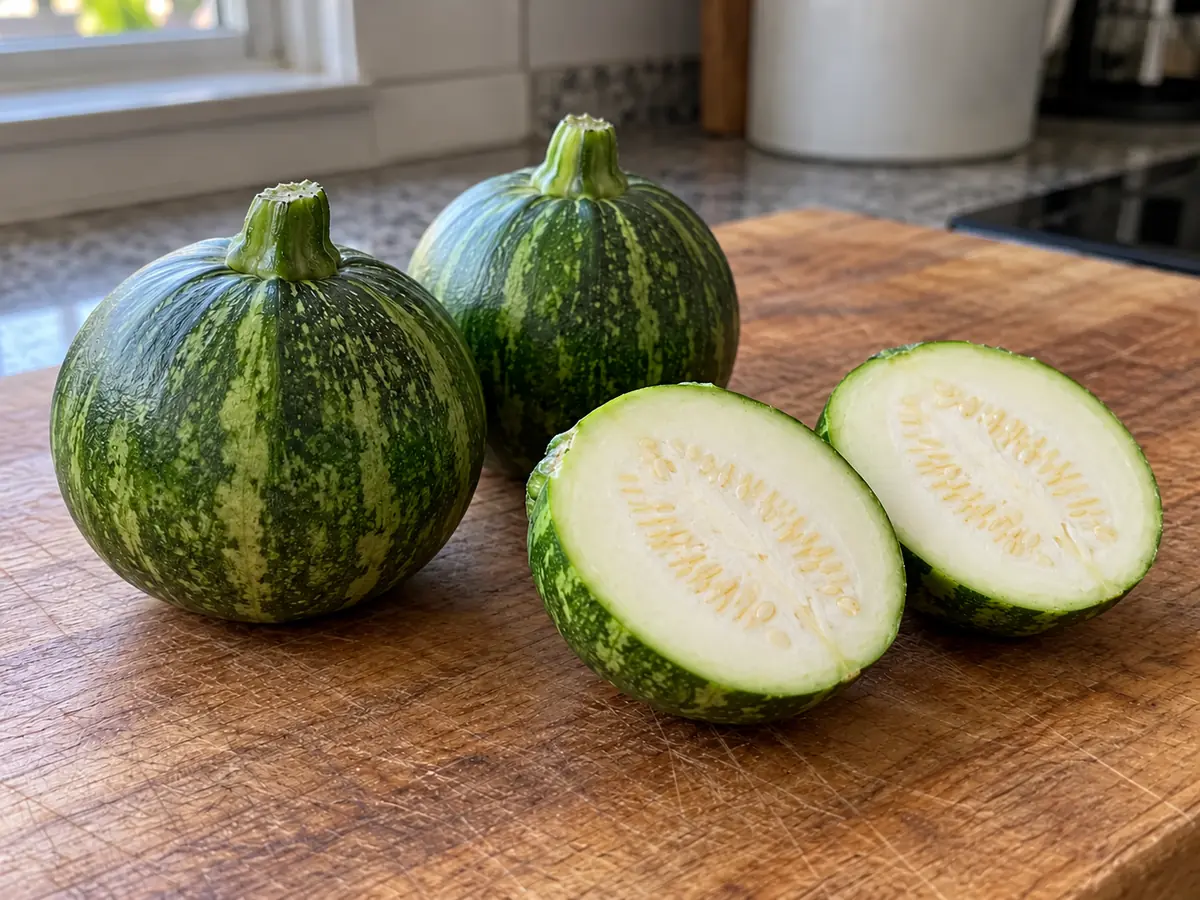
A round to oval squash from Mexico that can be picked young as a summer squash or left to mature.
- Origin: Cucurbita pepo; grown in Mexico and South Texas, where it is often sold as calabacita.
- Appearance: Dark green skin with lighter striping; pale flesh. Matures into a harder-skinned squash if left on the vine.
- Taste: Mild and slightly sweet, firmer than zucchini.
- Best uses: Calabacitas, stews, sautés, and stuffing.
- Kitchen note: It holds up to longer cooking than zucchini, which makes it the better choice for braised calabacitas.
- Points of interest: Tolerates heat and pests better than many summer squash.
15. Tromboncino Squash
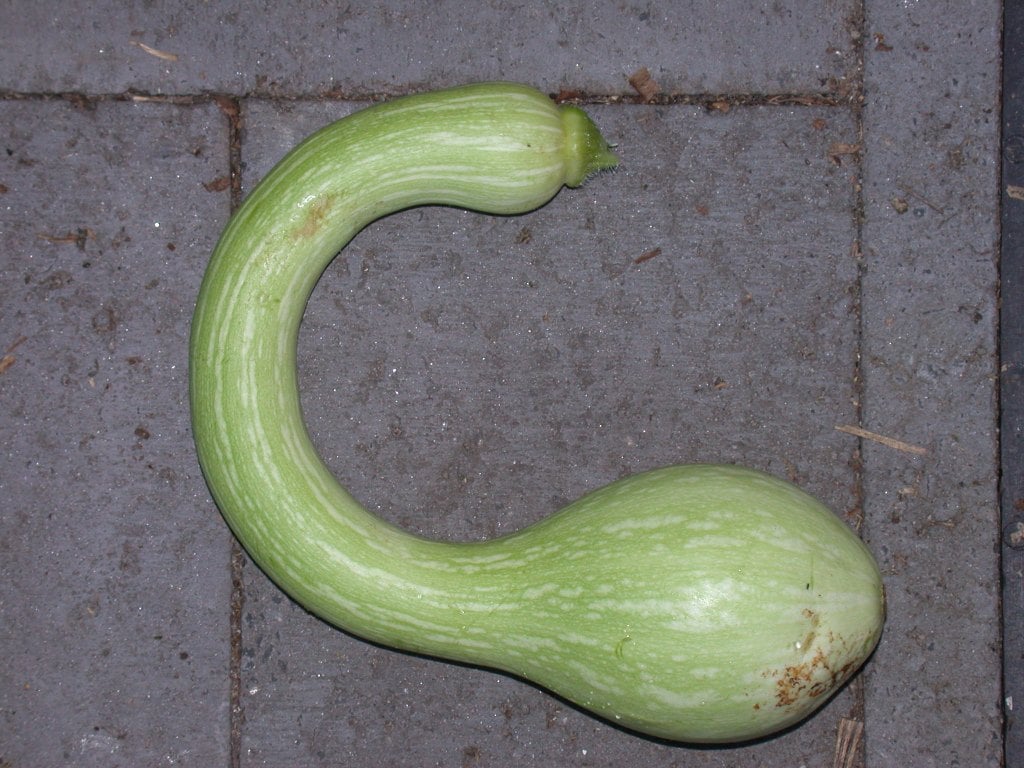
A long, curving Italian heirloom eaten young like zucchini or left to mature like butternut.
- Origin: Cucurbita moschata; heirloom from Liguria, Italy, also called zucchetta rampicante (climbing squash).
- Appearance: Pale green, slender, and curved with a bulb at the blossom end; can reach about 3 feet. Turns tan when mature.
- Taste: Young: firm, nutty, and less watery than zucchini. Mature: sweet like butternut.
- Best uses: Young: sautés, grills, and fritters. Mature: roasting and soups.
- Kitchen note: Most of the seeds sit in the bulb, so the long neck gives you clean, seedless slices.
- Points of interest: Grows best on a trellis, which keeps the fruit straighter. Mature fruit stores for months.
Squash blossoms

Squash blossoms are the flowers of squash plants, most often zucchini. They can be fried or sautéed, stuffed with cheese or other fillings, grilled over an open flame, baked in a casserole, or layered into lasagna.
Cook them the day you buy them; they wilt fast. Rinse gently, check inside for insects, and pinch out the stamen before stuffing.
Winter squash
Winter squash is left on the vine until the rind hardens and the seeds mature. The thick skin lets it keep for weeks to months in a cool, dry spot. The flesh is denser, sweeter, and starchier than summer squash, so it is usually roasted, steamed, or pureed. Most winter squash falls into one of three species, and each has its own texture.
Acorn-type and other C. pepo winter squash
Smaller, ribbed or striped squash with tender, slightly fibrous flesh. Several have skin thin enough to eat.
16. Acorn Squash
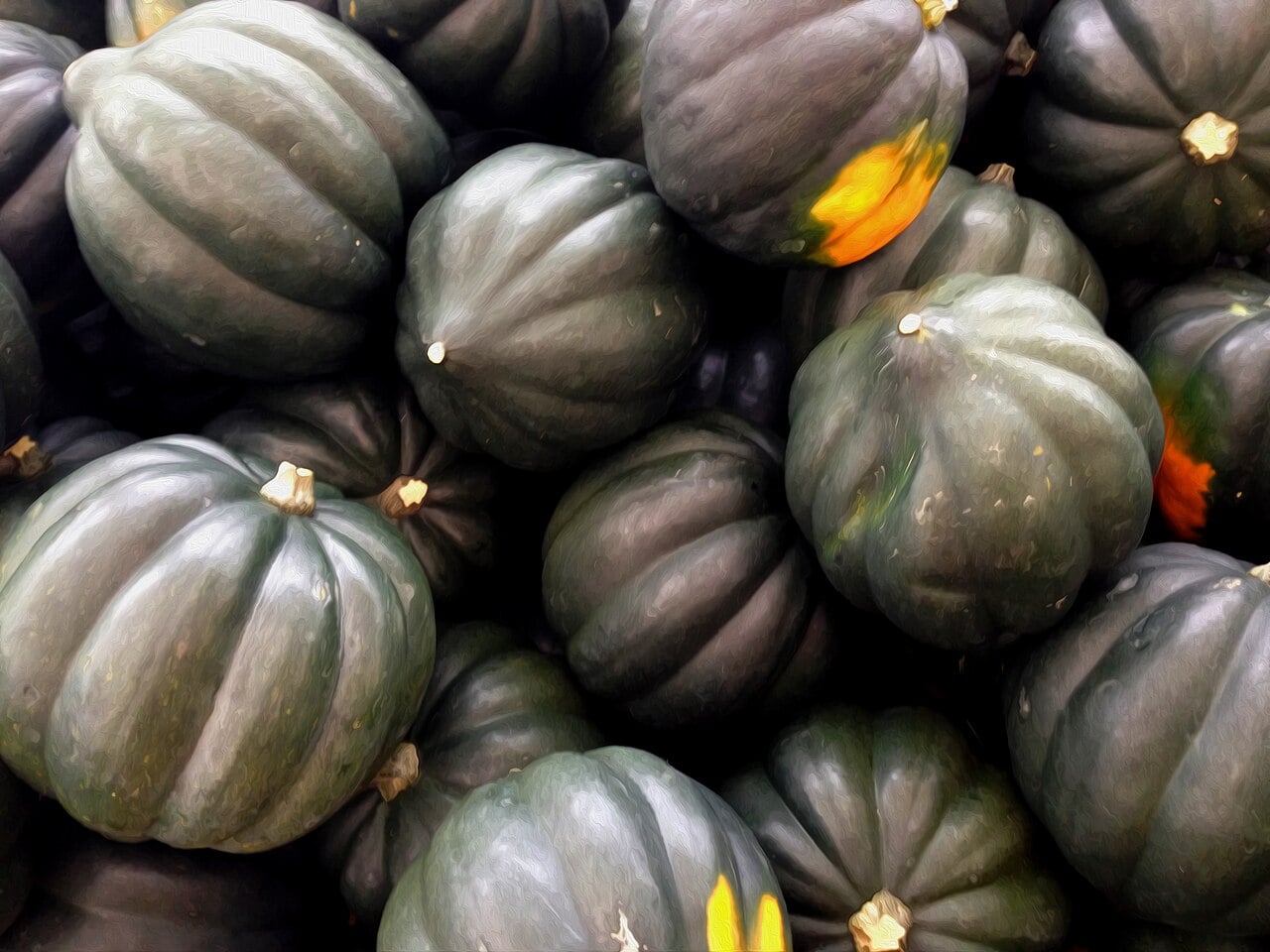
A round, deeply ribbed winter squash named for its acorn shape.
- Origin: Cucurbita pepo; a North American squash type.
- Appearance: Dark green ribbed skin, often with an orange patch where it rested on the ground; yellow-orange flesh with a central seed cavity.
- Taste: Mild, slightly sweet and nutty; less sweet and more fibrous than butternut.
- Best uses: Halved and baked, roasted wedges, stuffed, steamed, or sautéed.
- Kitchen note: Halve the squash pole to pole, scoop the seeds, and salt the cut faces. Microwave the halves covered, cut side down, until a paring knife slides in with no resistance (15 to 25 minutes), then brush with butter and brown sugar and broil 6 inches from the element for 5 to 8 minutes. Steaming first gives silky flesh, and the broiler adds the caramelized top without drying it out.
- Points of interest: A good source of fiber, potassium, and vitamin A. Golden and white acorn varieties also exist.
17. Honey Bear Squash
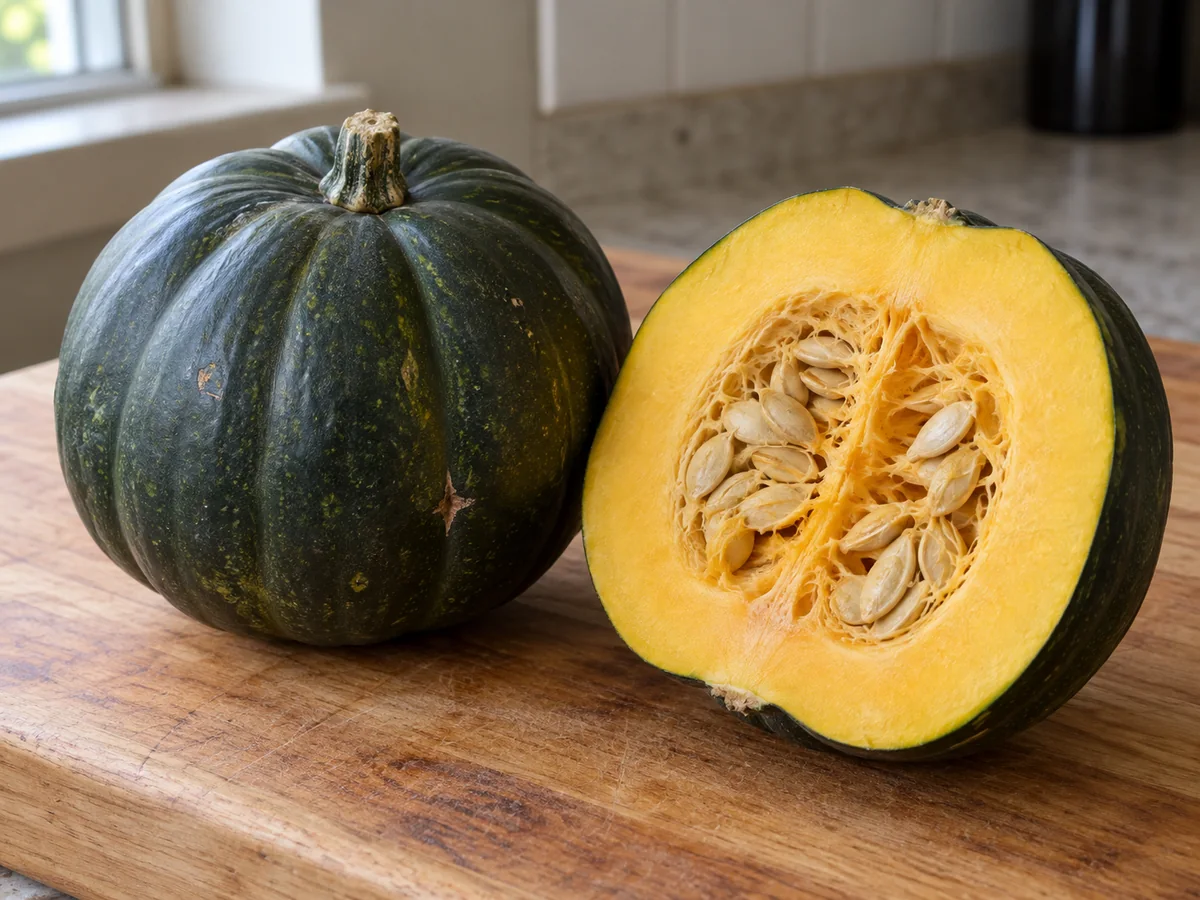
A compact acorn squash bred for sweet flavor and single-serving size.
- Origin: Cucurbita pepo; acorn-type hybrid.
- Appearance: Small, dark green, ribbed acorn shape.
- Taste: Sweeter than standard acorn squash when cooked.
- Best uses: Baked and served in the half shell.
- Kitchen note: One half per person makes it an easy weeknight side: roast cut-side down, then flip and finish with butter.
- Points of interest: Plants are tolerant of powdery mildew, which helps them keep producing late in the season.
18. Carnival Squash

A speckled acorn-type squash streaked with green, orange, and cream.
- Origin: Cucurbita pepo; acorn-type hybrid closely related to Sweet Dumpling.
- Appearance: Ribbed acorn shape with green, orange, and cream mottling; the colors deepen in storage.
- Taste: Sweet and buttery with smooth flesh.
- Best uses: Roasting, grilling, stuffing; holiday sides for Thanksgiving and Christmas.
- Kitchen note: Pick the heaviest one for its size with dull, not shiny, skin; shiny skin can mean it was harvested early.
- Points of interest: Often used as fall decoration before it ends up in the oven.
19. Sweet Dumpling Squash

A small, sweet squash that usually weighs less than a pound, ideal for single servings.
- Origin: Cucurbita pepo.
- Appearance: Creamy white to pale yellow skin with dark green stripes in the furrows; round and squat.
- Taste: Sweet and mild, similar to delicata.
- Best uses: Roasted, steamed, stuffed, or added to soups.
- Kitchen note: The skin is thin enough to eat once roasted, so there is no need to peel.
- Points of interest: Under 1 pound each.
20. Delicata Squash

A cylinder-shaped winter squash with thin, edible skin, which makes it the easiest winter squash to prep.
- Origin: Cucurbita pepo. Introduced in 1894 by Peter Henderson & Co. of New York; Cornell's disease-resistant Bush Delicata, the type most often sold today, won a 2002 All-America Selections award.
- Appearance: Cream to yellow skin with green stripes along shallow ridges; oblong, 6 to 10 inches long.
- Taste: Sweet and nutty with a creamy texture.
- Best uses: Roasted rings or half-moons, stuffed halves, salads, and grain bowls.
- Kitchen note: Leave the skin on; it turns tender and slightly chewy in the oven. Halve, seed, and cut half-moons about ½ inch thick, then roast at 400°F (205°C) for about 25 minutes, until both sides are golden. Delicata keeps for weeks rather than months, so cook it before butternut and other long keepers.
- Points of interest: Thinner skin means a shorter storage life than most winter squash: plan on weeks, not months.
21. Spaghetti Squash

A winter squash whose cooked flesh pulls apart into long, noodle-like strands.
- Origin: Cucurbita pepo, a New World species. Its stringy-fleshed type was grown in Manchuria, and Japan's Sakata Seed marketed it abroad in the 1930s; it appeared in US seed catalogs by the mid-1930s and caught on widely only in the 1970s.
- Appearance: Oblong with a smooth rind that turns pale yellow at maturity.
- Taste: Mild and slightly sweet with a crisp-tender, stringy texture.
- Best uses: A low-calorie, gluten-free stand-in for pasta, casseroles, and side dishes.
- Kitchen note: The strands run around the squash, not lengthwise, so cut it crosswise into halves or thick rings to keep them long. Scoop the seeds before cooking, then roast cut side down at 400°F (205°C) for 40 to 60 minutes until a fork slides in easily, or microwave tightly covered with a splash of water for about 10 minutes. Season the strands again after cooking; salt added beforehand stays on the surface.
- Points of interest: Popular as a pasta alternative.
22. Pumpkin Squash

A catch-all name for culinary pumpkins: round, orange winter squash grown for eating.
- Origin: Pumpkins come from several squash species; most pie and carving pumpkins are Cucurbita pepo.
- Appearance: Smooth or lightly ribbed orange rind; thick, hard shell filled with stringy pulp and seeds.
- Taste: Sweet and earthy; smaller pie pumpkins are sweeter and less watery than carving pumpkins.
- Best uses: Pies, soups, stews, curries, roasting, and mashing.
- Kitchen note: Use pie or sugar pumpkins for cooking; carving pumpkins are watery and stringy.
- Points of interest: A good source of fiber, vitamin C, and potassium. Don't throw away the seeds: roasted pumpkin seeds make an easy snack.
Kabocha, Hubbard and other C. maxima squash
The largest group, including Japanese kabocha types, buttercups, Hubbards, and banana squash. Expect dense, dry, very sweet flesh that roasts and purees beautifully.
23. Kabocha Squash
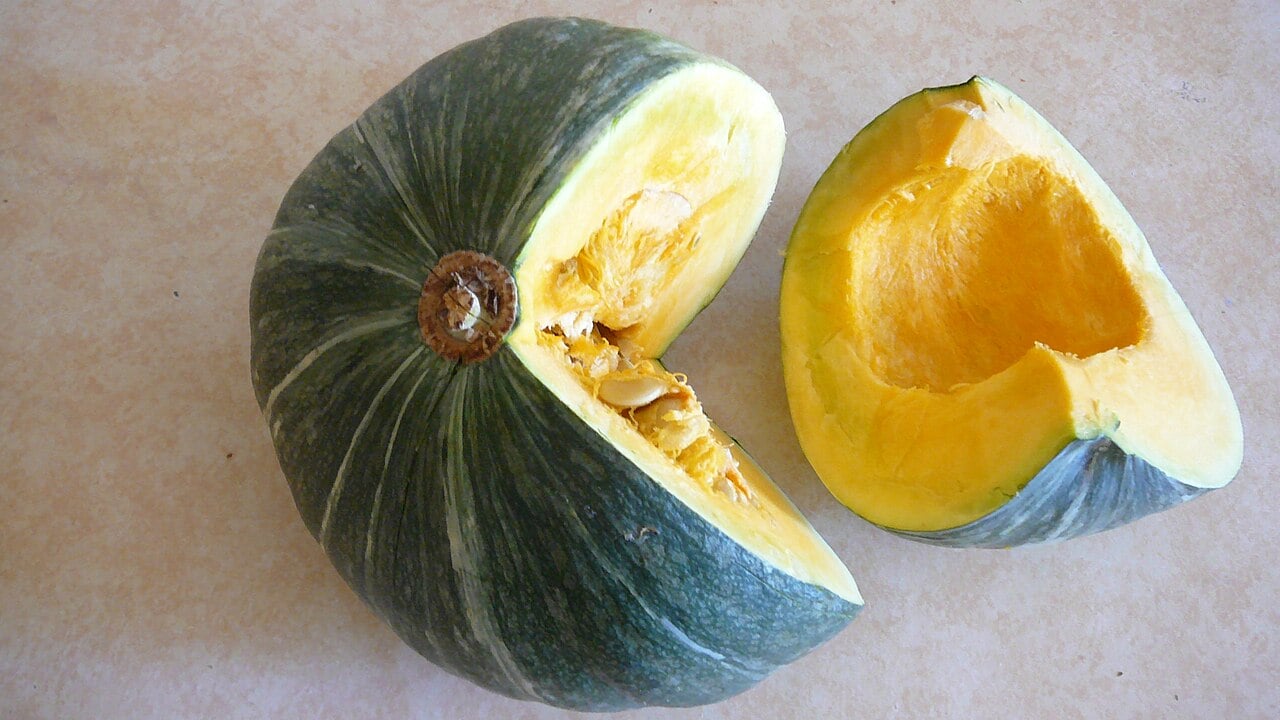
A squat Japanese winter squash with dark green skin and dense, sweet orange flesh.
- Origin: Cucurbita maxima; the Japanese name for a group of winter squash types, now grown worldwide.
- Appearance: Dark green, slightly bumpy skin with faint stripes; flattened round shape; deep orange flesh.
- Taste: Buttery and sweet, often compared to sweet potato or chestnut; drier than butternut.
- Best uses: Tempura, simmered dishes, soups, roasting, and curries. See our full guide to how to cook kabocha squash.
- Kitchen note: For simmering, trim the sharp edges off each piece so the corners don't break down and cloud the broth. Lay the pieces skin side down in one layer, simmer gently under a drop lid without stirring, and test with a skewer rather than the clock. For roasting, slice 3 to 5 mm thick and roast at 450°F (230°C) for about 15 minutes, flipping once.
- Points of interest: A popular tempura vegetable in Japan.
24. Sunshine Kabocha Squash
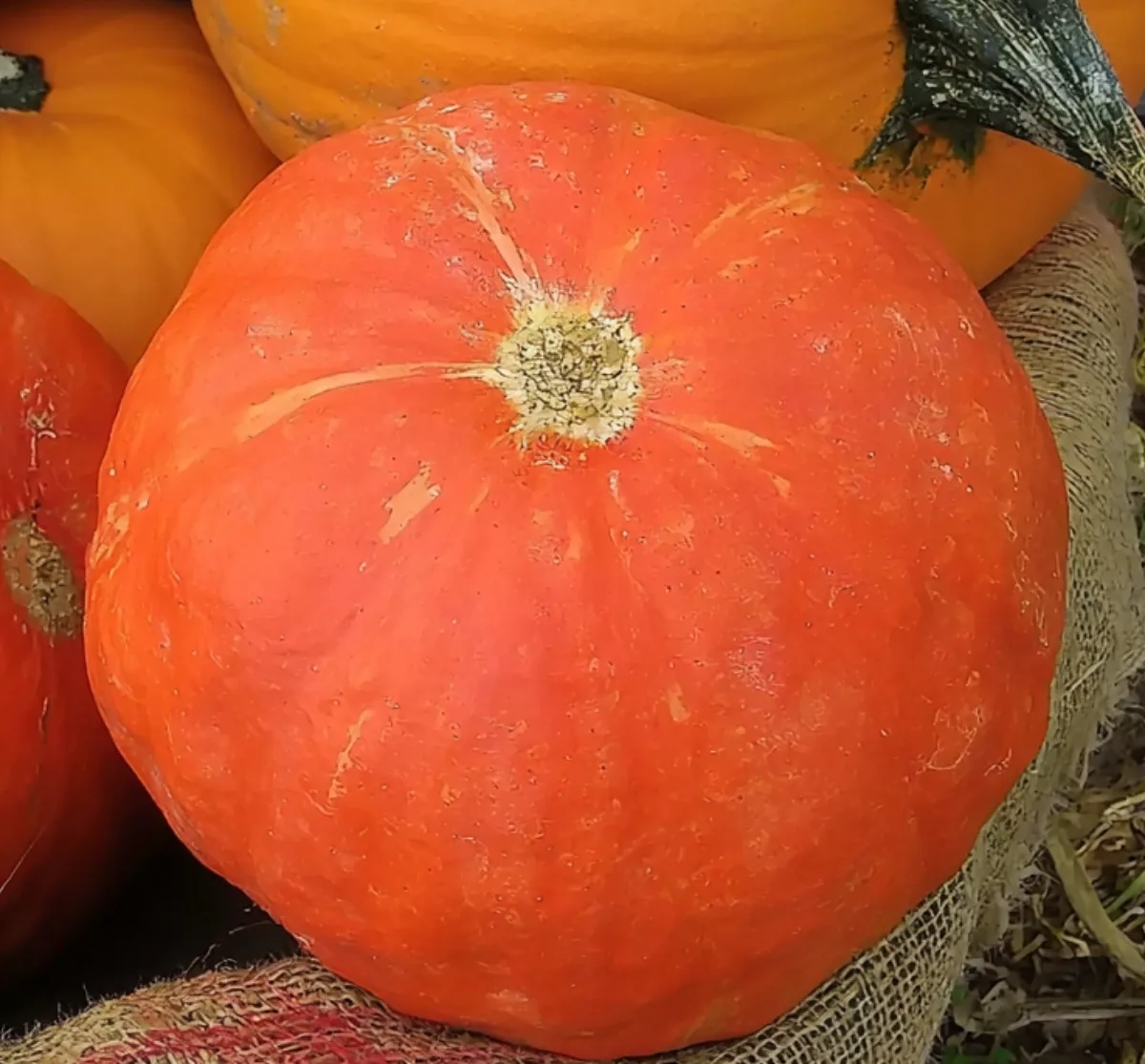
A scarlet-orange kabocha with a high sugar (Brix) content.
- Origin: Cucurbita maxima; kabocha-type hybrid.
- Appearance: Bright scarlet-orange, flattened round fruit; deep orange flesh.
- Taste: Sweet and smooth; one of the sweeter kabocha types.
- Best uses: Roasting, pies, purees, and soups.
- Kitchen note: Its dry, sweet flesh makes a good substitute for pumpkin in pie.
- Points of interest: The high Brix score is what sets it apart from green kabocha.
25. Ambercup Squash
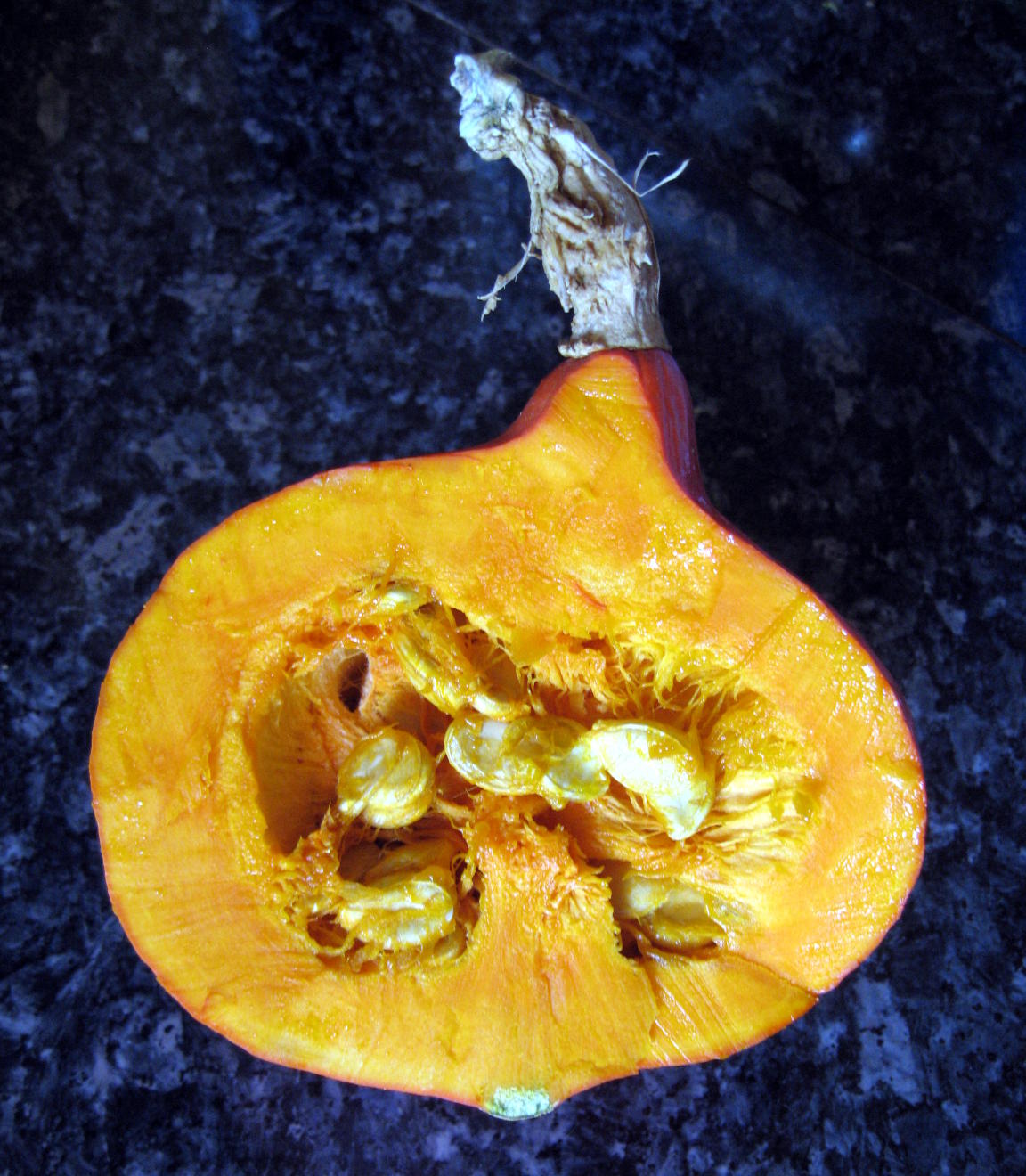
A buttercup/kabocha-type squash with orange-red skin, sometimes sold as Japanese pumpkin.
- Origin: Cucurbita maxima; buttercup/kabocha type.
- Appearance: Orange-red skin with moderate ribbing; 4 to 6 pounds at maturity; orange flesh.
- Taste: Sweet and dense, similar to buttercup.
- Best uses: Roasting, soups, purees, and baking.
- Kitchen note: Roast it in wedges with the skin on; the flesh is dry enough to caramelize at the edges.
- Points of interest: Usually sold under the name Japanese pumpkin 'Ambercup'.
26. Bonbon Squash
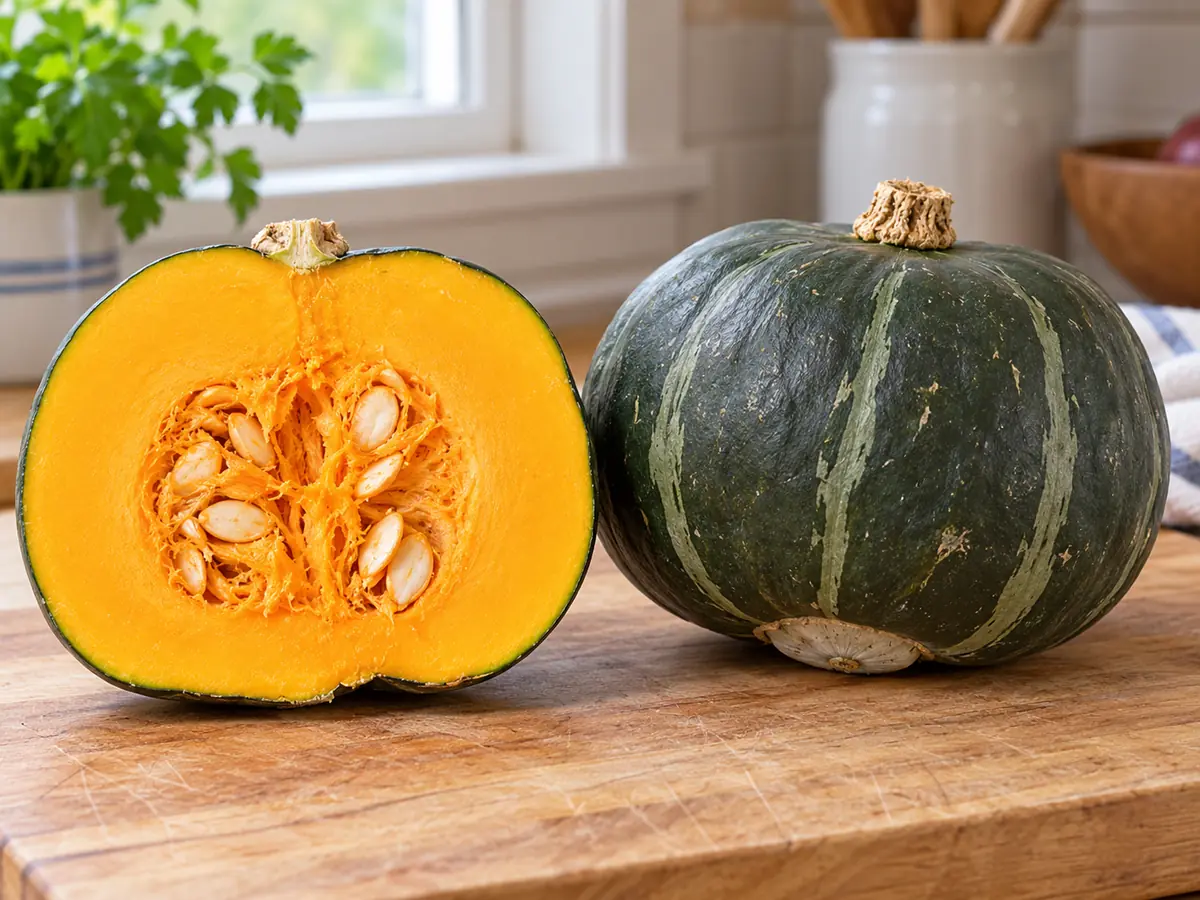
A buttercup-type squash bred for a sweet, almost candy-like flavor.
- Origin: Cucurbita maxima; buttercup-type hybrid.
- Appearance: Dark green, blocky round fruit with a small button at the blossom end.
- Taste: Sweet without being cloying; dense, smooth flesh.
- Best uses: Roasting, mashing, soups, and pies.
- Kitchen note: Its sweetness carries savory seasoning well: try it roasted with sage and brown butter.
- Points of interest: Plants have shorter vines and set fruit more quickly than many winter squash.
27. Buttercup Squash
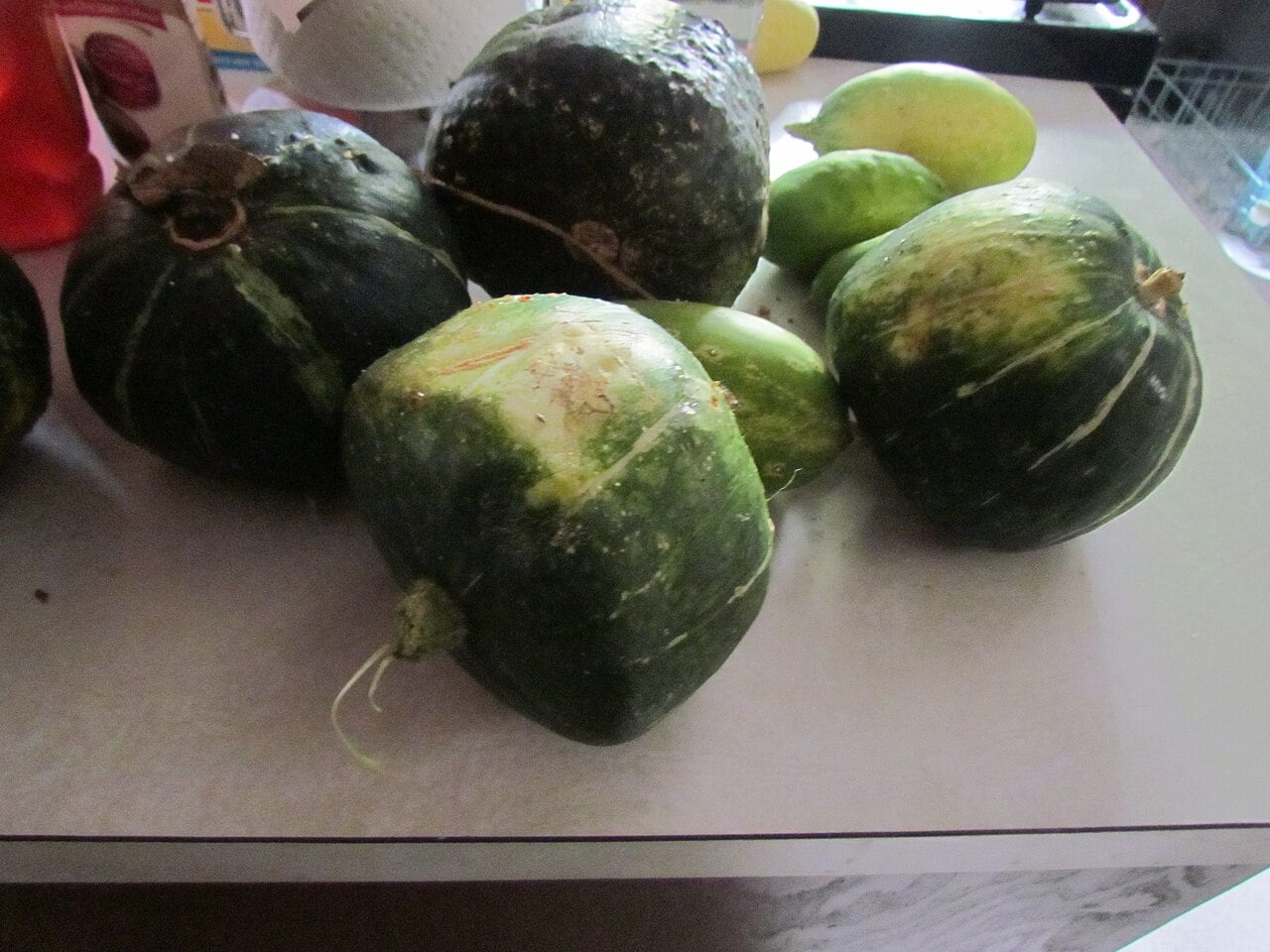
A dark green, turban-capped winter squash with very sweet, dry, orange flesh.
- Origin: Cucurbita maxima. Bred in the 1920s by Prof. A. F. Yeager at the North Dakota Agricultural Experiment Station in Fargo and released in 1932.
- Appearance: Squat, dark green skin with a gray-green "button" at the blossom end; bright orange flesh.
- Taste: Rich and sweet, drier and denser than butternut.
- Best uses: Pureed soups, roasted slices, and baking.
- Kitchen note: Because the flesh is dry, it makes thick, velvety soup without extra starch.
- Points of interest: In stores year-round, best from September through December.
28. Red Kuri Squash

A teardrop-shaped Japanese squash with vivid red-orange skin, also called Uchiki Kuri.
- Origin: Cucurbita maxima; Japanese variety, related to the Hubbard types.
- Appearance: Smooth red-orange skin, teardrop or onion shape; orange flesh.
- Taste: Sweet and nutty with a chestnut-like flavor (kuri means chestnut in Japanese).
- Best uses: Roasting, grilling, baking, soups, and purees.
- Kitchen note: Leave the skin on; it is thin, edible, and softens in the oven, while peeling it raw is a fight. Trim the ends so it sits flat, halve, seed, and cut ½-inch wedges, then roast at 375°F (190°C) for 30 to 35 minutes, flipping once. Its smooth, chestnut-like flesh blends into silky soup without straining.
- Points of interest: One of the most vibrant squash in the market.
29. Hubbard Squash
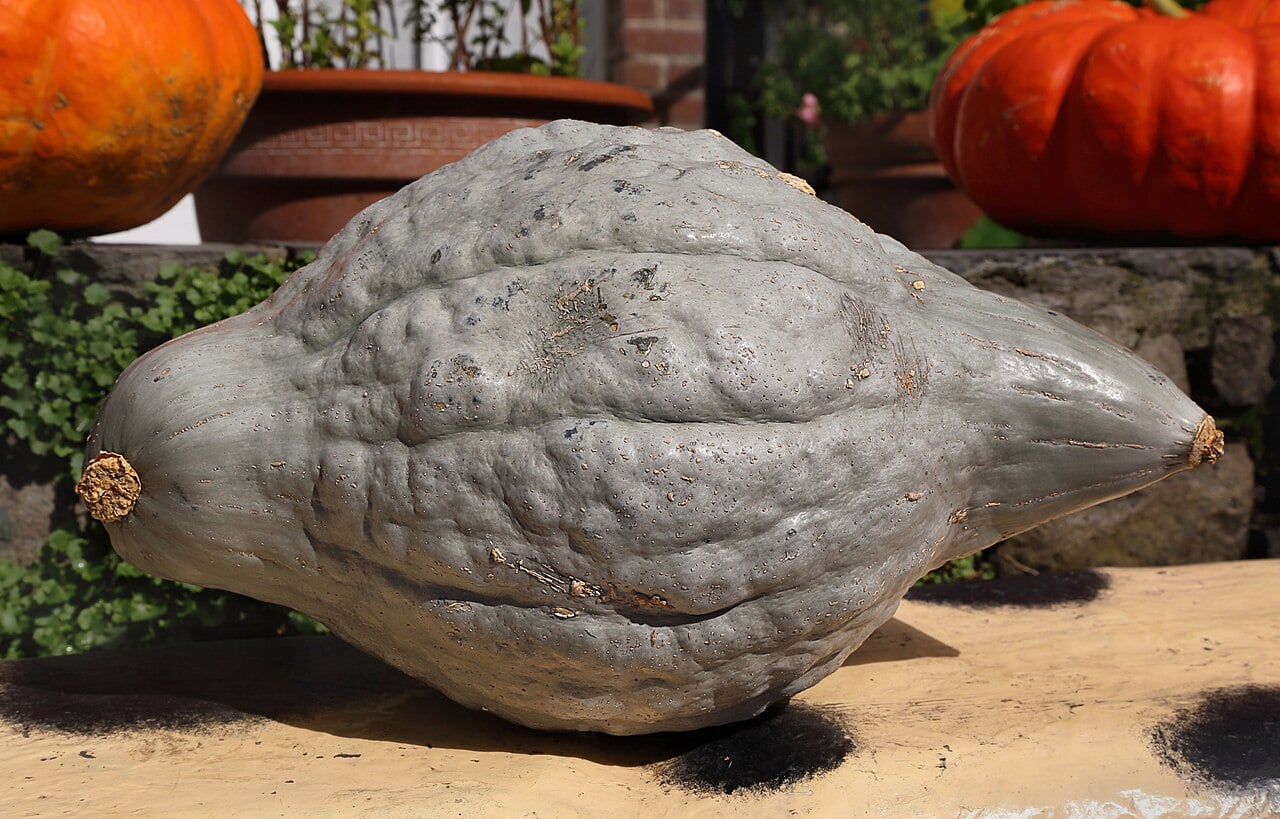
A large, hard-shelled winter squash prized for sweet flesh and long storage.
- Origin: Cucurbita maxima; a 19th-century New England variety.
- Appearance: Very hard, warty skin in blue-gray, green, or orange; teardrop shape; commonly 10 to 15 pounds, and some types grow much larger.
- Taste: Sweet and dense; excellent pureed or mashed.
- Best uses: Soups, purees, pies, and mashing.
- Kitchen note: Don't try to knife through a whole Hubbard. Double-bag it and drop it on a hard floor until it cracks, or pierce it all over and bake it whole at 400°F (205°C) for about an hour, then halve, seed, and scoop. For the smoothest pie or purée, cook the scooped flesh covered and slowly so the grainy fibers break down.
- Points of interest: Blue Hubbard is the best-known color form.
30. Red Warty Thing Squash

An heirloom squash with bright red-orange skin covered in bumps.
- Origin: Cucurbita maxima; heirloom Hubbard-type squash.
- Appearance: Thick, hard, vivid red-orange skin with dense warts; round to slightly flattened.
- Taste: Sweet with finely textured flesh.
- Best uses: Roasting, soups, and pies; a good stand-in for red Hubbard.
- Kitchen note: The hard rind stores for months, so it can sit on the counter as decoration before you cook it.
- Points of interest: Often described as a Hubbard relative, which is why it substitutes well for red Hubbard.
31. Banana Squash

A long, cylinder-shaped winter squash, usually sold cut into pieces because of its size.
- Origin: Cucurbita maxima; banana types trace back to South America.
- Appearance: Light pinkish-orange skin (pink banana); can grow up to 3 feet long; thick skin, orange flesh.
- Taste: Sweet and mild; good for pies.
- Best uses: Roasting, pies, and purees. Peel before cooking; only the flesh is eaten.
- Kitchen note: Buy a pre-cut wedge instead of a whole one unless you are cooking for a crowd.
- Points of interest: Also called pink banana squash. Available year-round, in season in fall and winter.
32. Guatemalan Blue Squash

A large, blue-gray banana-type squash with a smooth, hard rind.
- Origin: Cucurbita maxima; banana type.
- Appearance: Blue-gray skin, elongated with tapered, curved ends; can weigh up to 10 pounds.
- Taste: Sweet, dry, orange flesh.
- Best uses: Roasting, baking, and pies.
- Kitchen note: Treat it like banana squash: cut into chunks, roast, then scoop from the skin.
- Points of interest: The blue rind helps it store well.
33. Turban Squash

A strikingly shaped squash that looks like a small squash growing out of a larger one.
- Origin: Cucurbita maxima, the same species as kabocha, buttercup, and Hubbard.
- Appearance: Up to about 6 pounds; orange, green, and white stripes and spots on a turban-shaped cap.
- Taste: Milder than buttercup or Hubbard.
- Best uses: Roasting, soups, or as a hollowed-out soup tureen; also widely used for decoration.
- Kitchen note: Cut off the cap, scoop out the seeds, and roast it whole to serve soup inside.
- Points of interest: Also called Turk's Turban.
34. Big Max Squash
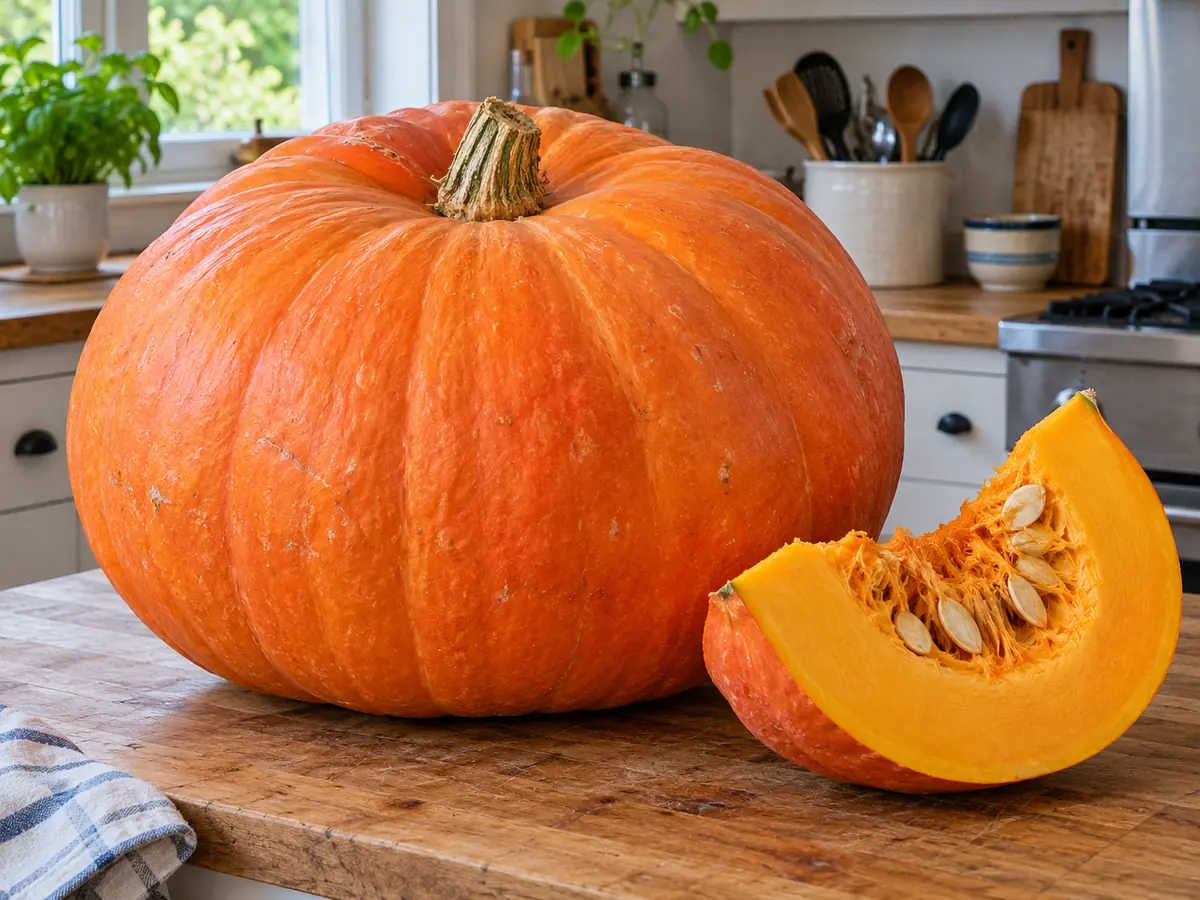
A giant pumpkin variety grown more for size than flavor.
- Origin: Cucurbita maxima; giant pumpkin type.
- Appearance: Bright orange, slightly ribbed; can exceed 100 pounds and 20 inches across; flesh 3 to 4 inches thick.
- Taste: Fine-grained yellow flesh; edible, though coarser than smaller pumpkins.
- Best uses: Fair displays and carving; the flesh can be roasted or used in pies.
- Kitchen note: For cooking, smaller sugar pumpkins give better flavor and less water.
- Points of interest: A favorite for giant-pumpkin contests.
Butternut and other C. moschata squash
Tan or buff skin, solid necks, and smooth, moist, sweet flesh. Moschata squash handles heat well and is the species behind most canned pumpkin.
35. Butternut Squash

The most popular winter squash in the United States: a bell-shaped squash with a long solid neck and a small seed cavity.
- Origin: Cucurbita moschata. Developed in the 1940s by Charles Leggett of Stow, Massachusetts, and later refined into 'Waltham Butternut' at the Waltham Field Station.
- Appearance: Smooth tan skin, long neck and bulbous base; deep orange flesh.
- Taste: Sweet, nutty, and smooth.
- Best uses: Roasting, soups, purees, risotto, pasta fillings, and baking.
- Kitchen note: Peel past the pale, greenish layer under the skin until only deep-orange flesh shows; that layer stays fibrous after cooking. Cut 1½-inch cubes and roast at 425°F (220°C) on a roomy sheet pan for 45 to 50 minutes, stirring every 15 minutes, until browned at the edges. Buy squash with a dry, corky stem and store whole squash in a cool pantry, not the fridge.
- Points of interest: Harvested in fall when the skin turns fully tan. The neck is solid flesh, so it gives the most usable yield of any common winter squash.
36. Honeynut Squash

A miniature butternut with richer, sweeter flesh concentrated into a smaller size.
- Origin: Cucurbita moschata. Developed at Cornell University by plant breeder Michael Mazourek, building on a butternut-and-buttercup cross first made at Cornell in the 1980s, with flavor input from chef Dan Barber; it reached markets around 2015.
- Appearance: Looks like a mini butternut, about 4 to 6 inches long; skin turns from green to deep tan-orange when ripe.
- Taste: Sweeter and richer than butternut.
- Best uses: Halved and roasted, stuffed, or in both sweet and savory dishes.
- Kitchen note: Wait until the rind is fully orange; green streaks mean it was picked before peak sweetness. Leave the thin skin on, halve and seed it, and roast cut side down at 450°F (230°C) for 20 to 25 minutes, until soft and caramelized underneath. Use a mix of butter and oil at this heat so the butter doesn't burn.
- Points of interest: The seed cavity is much smaller than butternut or pumpkin, so there is less waste, and the skin is thin enough to eat.
37. Calabaza Squash
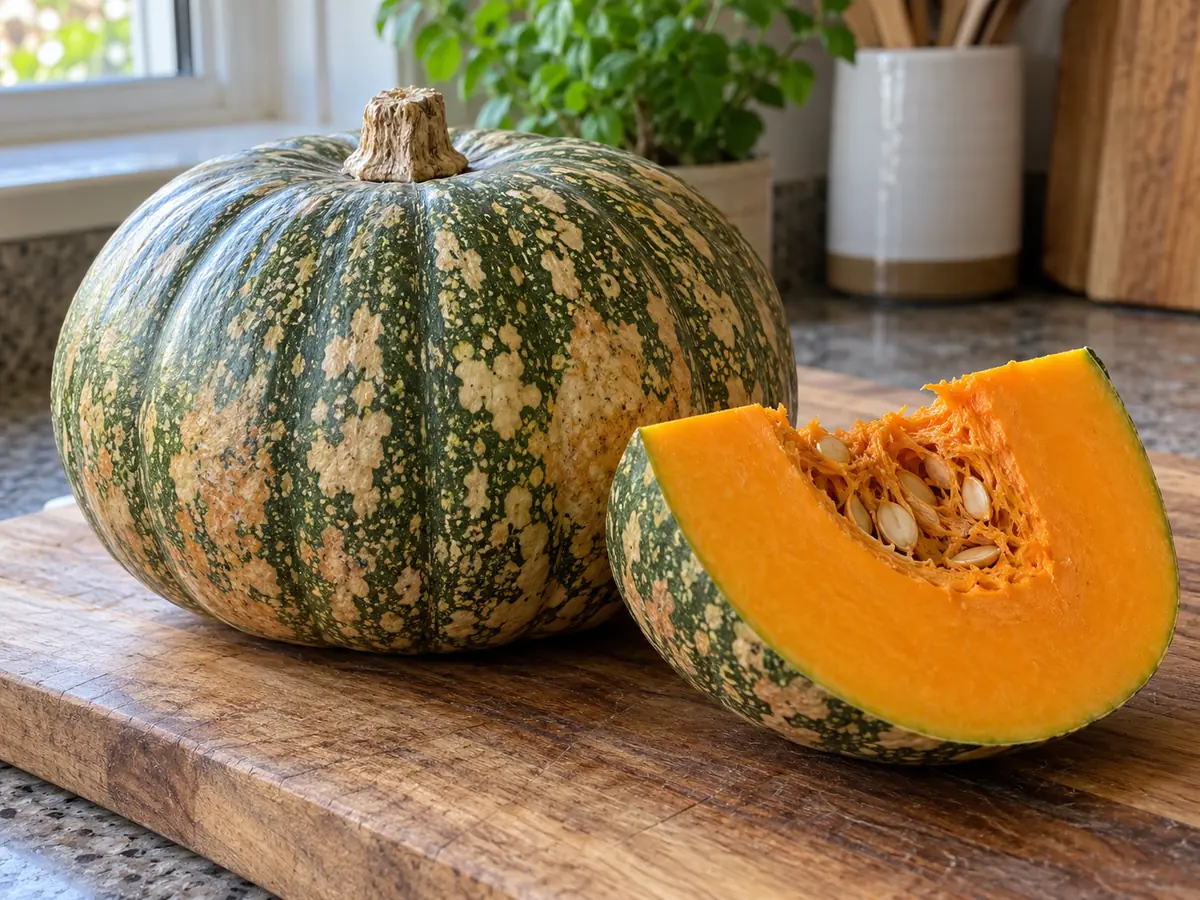
A large tropical squash widely used in Caribbean and Latin American cooking, also called West Indian pumpkin.
- Origin: Cucurbita moschata; grown throughout the Caribbean and Latin America.
- Appearance: Varies widely in size and shape; hard skin with vertical ridges; green, yellow-orange, or mottled; often sold cut into wedges.
- Taste: Sweet, moist orange flesh, similar to butternut.
- Best uses: Stews, soups, beans, and rice dishes; roasting.
- Kitchen note: It is usually sold in wedges. Look for bright, moist flesh and no dry or slimy edges.
- Points of interest: Butternut is the easiest substitute when calabaza isn't available.
38. Dickinson Squash

An American heirloom winter squash, long in shape with dense, sweet flesh, and the type most used for canned pumpkin.
- Origin: Cucurbita moschata; American heirloom. Reported to have been brought to Illinois from Kentucky by Elijah Dickinson in 1835.
- Appearance: Tan rind, long or oblong shape; often 10 to 40 pounds.
- Taste: Sweet, dense, moist orange flesh.
- Best uses: Pumpkin pie, soups, and baking.
- Kitchen note: Its smooth, low-fiber flesh is why it is the pie pumpkin of choice. Roast and puree it instead of using carving pumpkins.
- Points of interest: Most commonly grown in Illinois, where it supplies much of the canned pumpkin in the United States.
39. Long Island Cheese Pumpkin
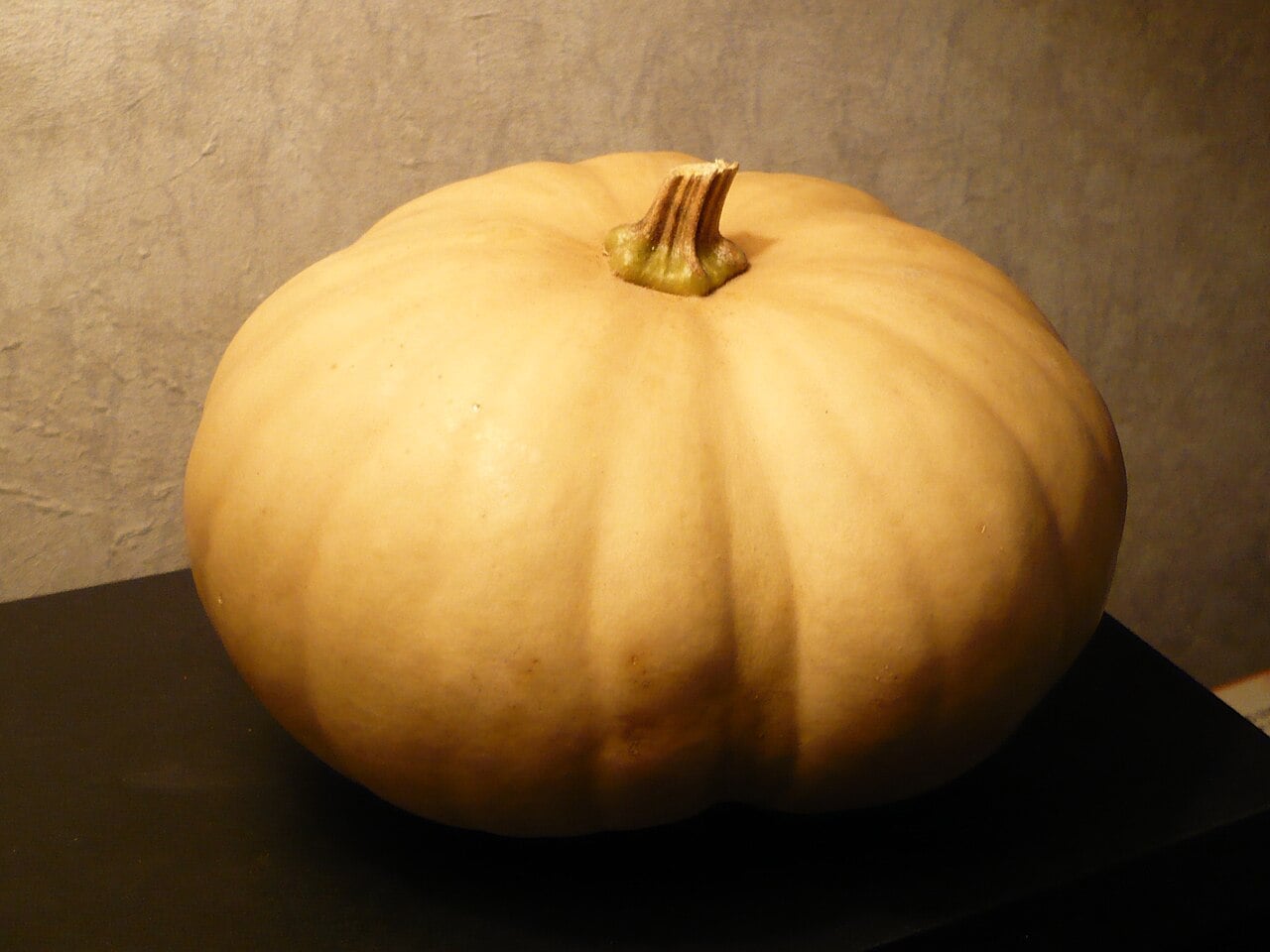
A flattened, buff-colored heirloom named for its resemblance to a wheel of cheese.
- Origin: Cucurbita moschata; one of the oldest pumpkins cultivated in America, associated with Long Island, New York.
- Appearance: Pale tan, flattened and lightly ribbed; 5 to 10 pounds; each plant yields two or three fruits.
- Taste: Sweet, smooth, deep orange flesh with little stringiness.
- Best uses: Pies, soups, and roasting.
- Kitchen note: Bake halves cut-side down, then scoop and puree for pie; the flesh is smooth enough that you rarely need to strain it.
- Points of interest: Keeps for months in a cool, dry place.
40. Naples Long Squash
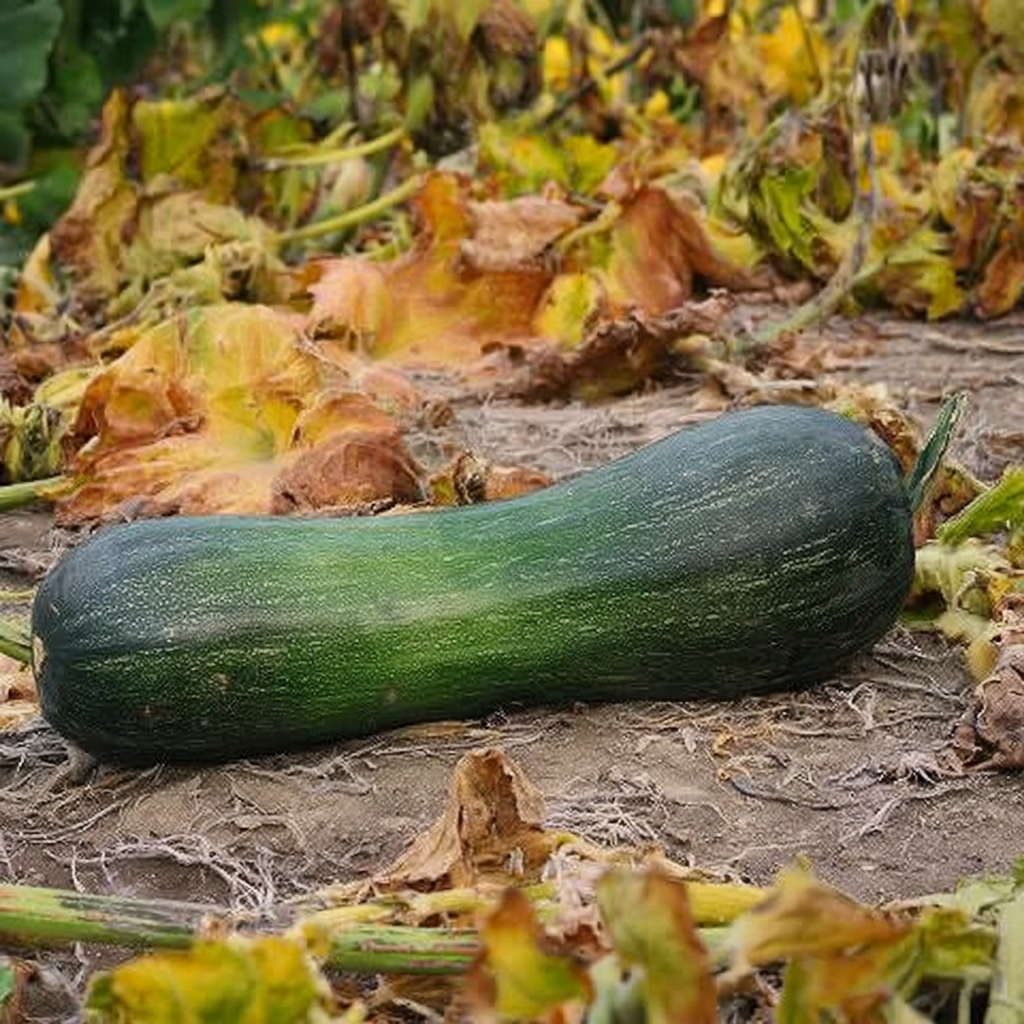
A very long Italian heirloom squash with green skin and bright orange flesh.
- Origin: Cucurbita moschata; heirloom from southern Italy (Lunga di Napoli).
- Appearance: Long, club-shaped fruit with green skin that turns tan in storage; up to about 35 pounds.
- Taste: Sweet, rich, and dense, similar to butternut.
- Best uses: Roasting, soups, and pies.
- Kitchen note: A single fruit feeds a crowd; cut what you need and wrap the cut end tightly in the refrigerator.
- Points of interest: Sought after by growers for size and flavor.
41. Yokohama Squash
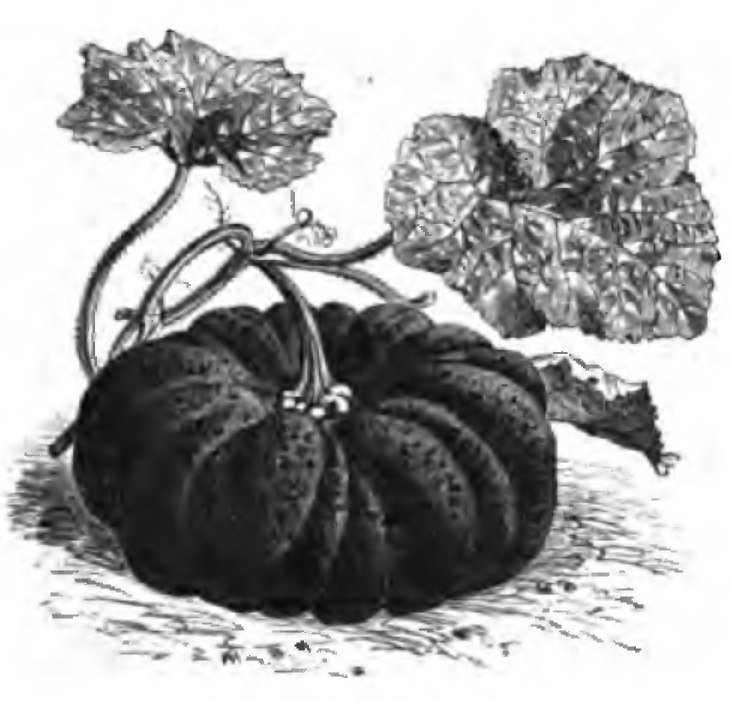
A flattened Japanese squash with dark gray-green, deeply ridged, bumpy skin.
- Origin: Cucurbita moschata; Japanese variety named after the port city of Yokohama, opened to international trade in 1859.
- Appearance: Dark green to gray, flattened, ribbed, and warty.
- Taste: Sweet, moist flesh; familiar winter-squash flavor despite the unusual look.
- Best uses: Use like butternut: roasting, soups, simmered dishes.
- Kitchen note: Steaming or simmering suits its moist flesh better than high-heat roasting.
- Points of interest: Its rough, warty skin is normal and does not affect the flesh.
Squash relatives
These three are often sold as squash but come from different species. They cook like squash, with a few differences.
42. Cushaw Squash
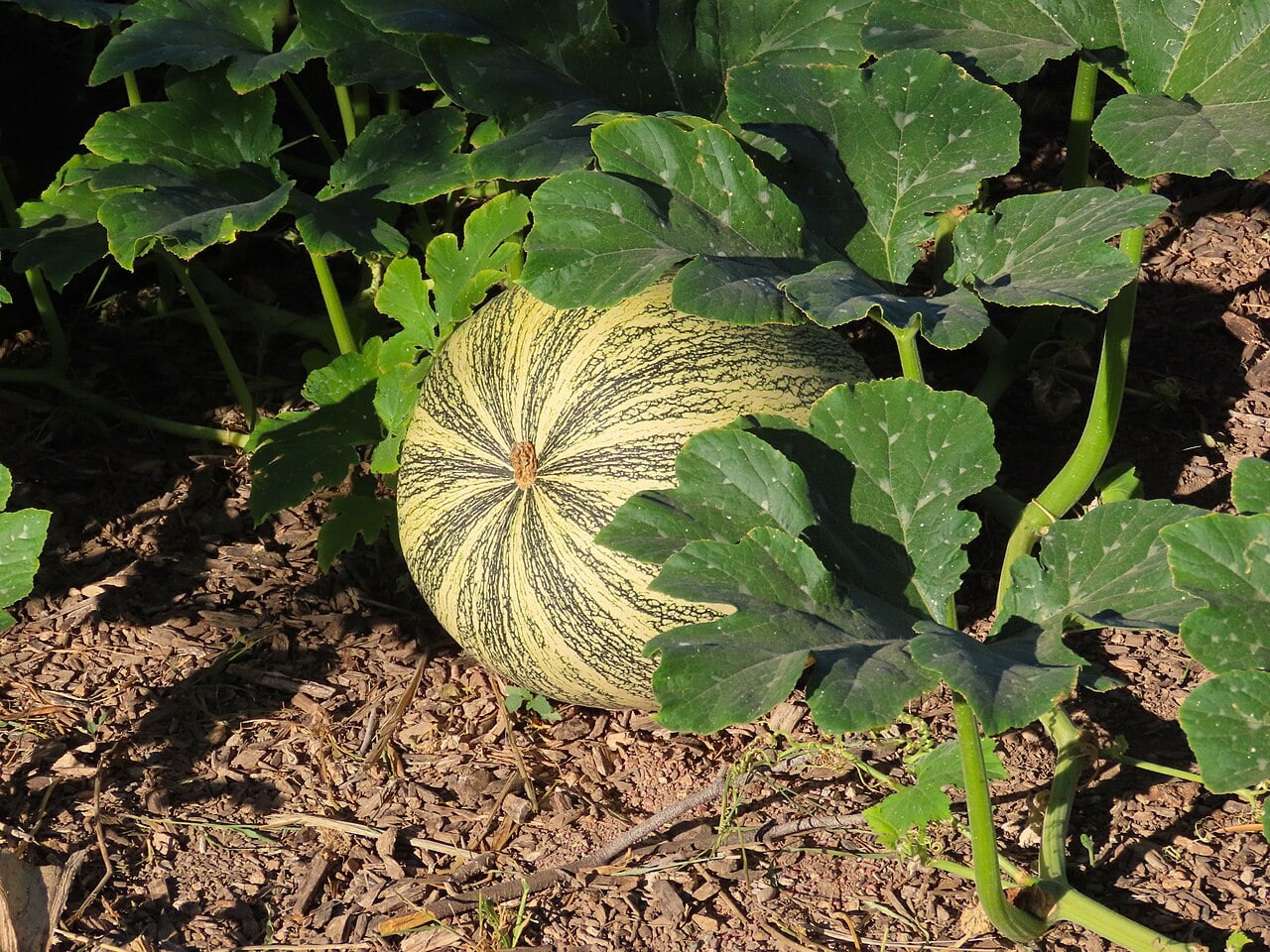
A large, crookneck winter squash popular in Southern and Appalachian cooking.
- Origin: Cucurbita argyrosperma; originally from Mexico and Central America.
- Appearance: Green-and-white striped (or solid) skin, long curved neck and round base; pale yellow flesh.
- Taste: Mild and slightly sweet; more fibrous than butternut.
- Best uses: Pies, butters, and baking; the seeds are toasted and ground for sauces in Mexican cooking.
- Kitchen note: Spice it boldly in pies; its mild flesh needs more sugar and spice than pumpkin.
- Points of interest: The plants also produce edible flowers and shoots.
43. Chilacayote Squash
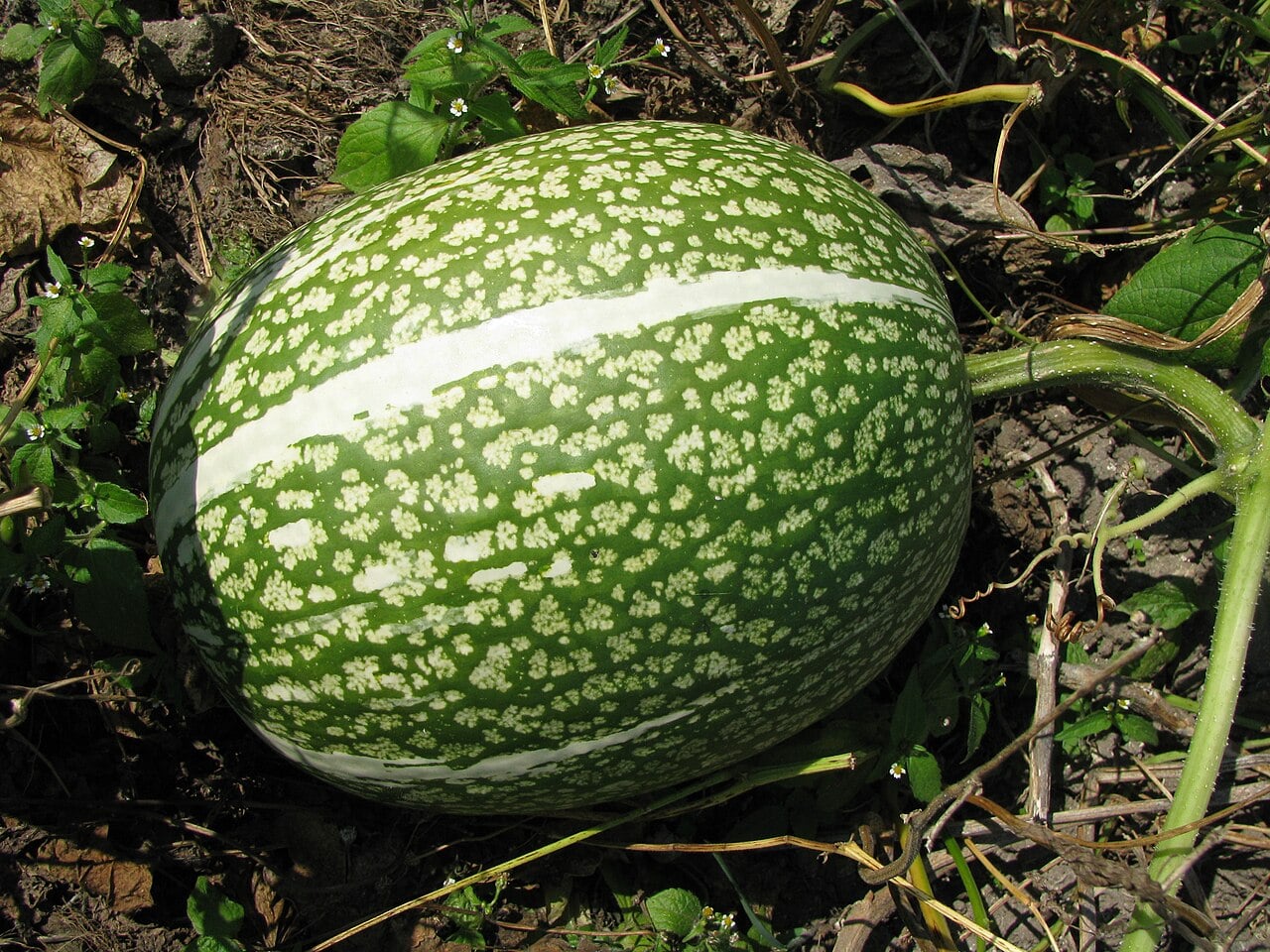
A squash grown for its edible seeds and fruit, also called fig-leaf gourd or black seed squash.
- Origin: Cucurbita ficifolia; grown in the highlands from Mexico to South America.
- Appearance: Large, oval, green fruit mottled with white stripes; white flesh and black seeds.
- Taste: Very mild, with a stringy texture when cooked.
- Best uses: Candied sweets, drinks, and stews; the seeds are roasted.
- Kitchen note: The cooked flesh separates into fine strands, which is why it is candied into the sweet known as angel's hair.
- Points of interest: It does not readily cross with other cultivated squash species.
44. Chayote Squash
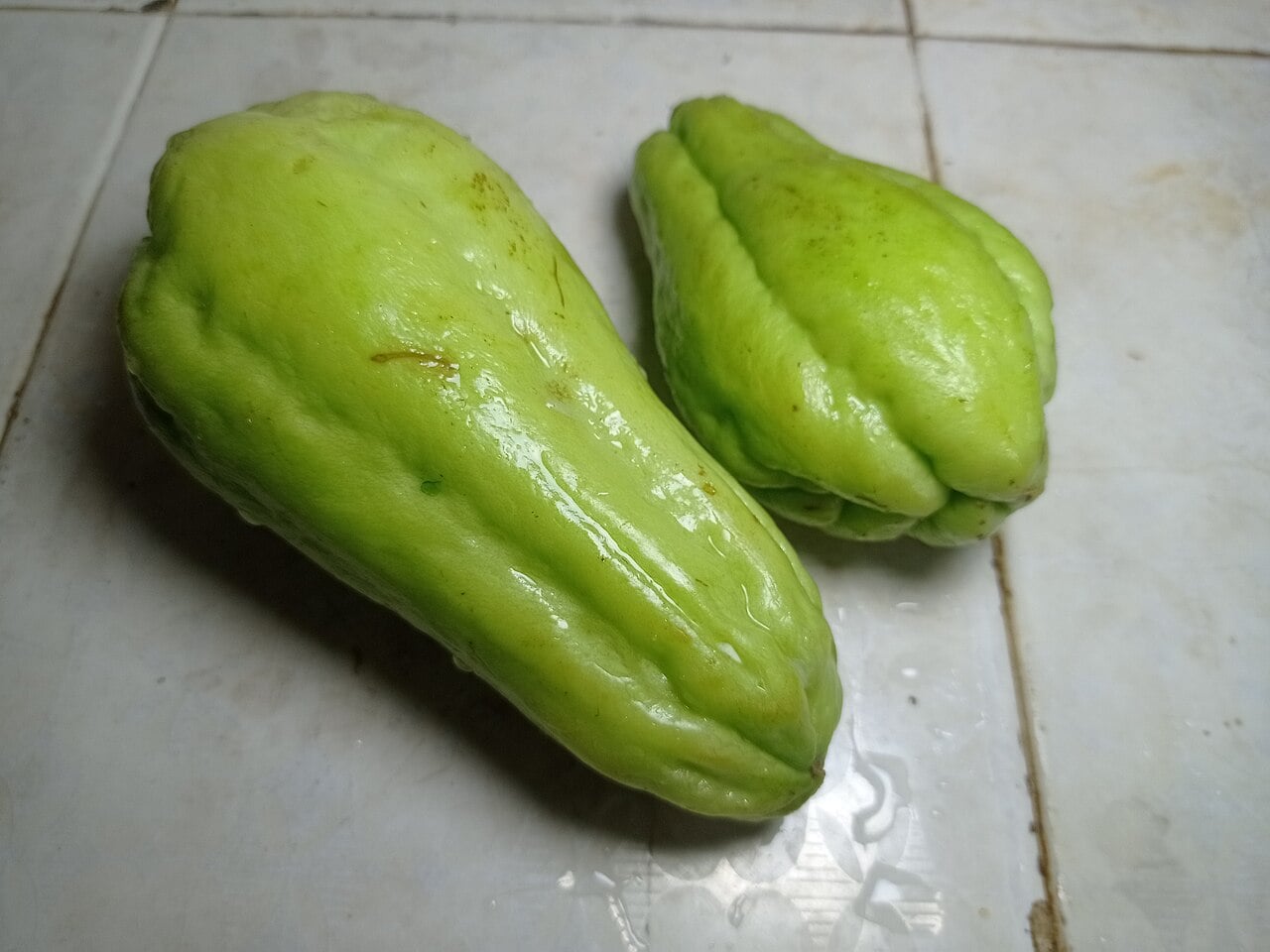
A pear-shaped gourd cooked like summer squash, also called mirliton or christophene.
- Origin: Sechium edule, a member of the gourd family but not a true Cucurbita squash; native to Mexico and Central America.
- Appearance: Pale green, pear-shaped, with deep furrows; a single large, soft seed inside.
- Taste: Mild, crisp, and slightly sweet; similar to cucumber when raw, like summer squash when cooked.
- Best uses: Raw in slaws and salads, sautéed, stuffed (mirliton dressing in Louisiana), soups, and stews.
- Kitchen note: Some people get a sticky residue on their hands when peeling it raw. Wear gloves or peel under running water.
- Points of interest: Long grown in Latin America; it has only recently caught on widely in the United States.
How to choose and store squash
- Summer squash: pick small, firm squash with glossy, unblemished skin. Smaller is more tender and less seedy. Refrigerate unwashed and use within about a week.
- Winter squash: choose squash that feel heavy for their size, with dull, hard skin and a dry, intact stem. Avoid soft spots and cracks. Store whole in a cool, dry, dark place, where many types keep for one to several months; thin-skinned delicata and sweet dumpling keep the shortest.
- Cut squash: wrap tightly and refrigerate; use within a few days.
How to cut hard winter squash
- Trim a thin slice off one side so the squash sits flat and can't roll.
- Use a heavy chef's knife and work in short, controlled cuts instead of forcing the blade through.
- If the rind is very hard, microwave or bake the whole squash for a few minutes to soften the skin first. Pierce it with a knife before microwaving.
- Scoop the seeds with a sturdy spoon. Save them to roast like pumpkin seeds.
FAQs
Yes. Butternut, kabocha, and other winter squash are safe raw when shaved thin or grated into salads and slaws, but the dense flesh is hard and starchy, so most winter squash is better roasted, steamed, or pureed. Summer squash like zucchini and yellow squash is tender enough to eat raw as is.
A strongly bitter taste comes from cucurbitacins, natural compounds that can build up when plants are stressed by heat or drought, or when garden squash crosses with ornamental gourds. Poison Control advises spitting out bitter squash and throwing the rest away, because cooking does not remove the compound and eating it can cause vomiting, diarrhea, and stomach cramps.
Squash cross-pollinate easily within the same species, so bees can carry pollen between a zucchini, an acorn squash, and a decorative gourd in the same garden or neighborhood. The squash you ate looked normal, but its seeds carried the cross, and the plants grown from them produce mixed shapes and colors. Hybrid varieties also do not grow true from saved seed. Buy fresh seed if you want a specific variety.
Whole winter squash stored in a cool, dry, dark spot keeps for one to several months, depending on the type. Thick-skinned Hubbard, butternut, and banana squash last the longest; thin-skinned delicata and sweet dumpling should be used within a few weeks. Once cut, wrap it tightly, refrigerate, and use it within a few days.
All summer squash, plus delicata, honeynut, sweet dumpling, kabocha, and red kuri. Their skins soften enough when roasted or simmered to eat. Peel thick, hard-skinned types like butternut, Hubbard, and banana squash.
Yes. Pumpkins are winter squash from the same Cucurbita species as acorn, butternut, and Hubbard. "Pumpkin" is a common name for round, usually orange types, not a separate plant group.


Professor Squash says
My favorite squash is the red kuri squash !
linny says
My squash is not here. My farmer friend insisted she planted Delicata seeds from a squash I gave her last year. Delicatas are appearing, but on the same vine there appears to be another variety. Round, yet flat, creamy white and turning green, the largest is now about 8" across and has 10 lobes. The smaller ones appear a little like a Patty Pan. I can't find a picture anywhere on any site. Any idea?
nate rey says
most useful, thank you.
Steven Pennington says
Most welcome; glad to be of service.
Anonymous says
Excellent! Thanks
Rufus says
Awesome job. I had a squash that I couldn't identify and your page made it easy. Must of been quite the labour of love. Thanks!
Phyllis Ruthven says
Grew what I thought was squash from seeds off my yellow sqash last year. I ended up with green fruit about 8 to 10 inch diameter. Think it might be cross between butternut and zuchini as that is what I had last year. It is a community garden, so busy bees could have crossed with someone else's squash too. These grew 8"" to 12" diameter, smooth skin with slight ribbing. Have photo, but see no way to post here.